CrazyBulk Testo-Max Review: Heart-Health Considerations
Label-based review of CrazyBulk Testo-Max: D-aspartic acid, cardiovascular precautions and what the supporting research can—and cannot—show.
CrazyBulk Testo-Max is marketed with the language of strength, bodybuilding and testosterone support. Its front bottle identifies a strength-and-energy supplement, while the sales page also uses steroid-alternative positioning. The similarity of the marketing theme does not establish a similarity of effect.
Published-label and research assessment. We checked current catalog information, available Supplement Facts images and linked scientific sources. No personal use, independent laboratory testing or head-to-head trial is claimed. Two promotional recommendations concern products or services sold by the owner of this publication.
Is CrazyBulk Testo-Max the right fit for your goal?
CrazyBulk Testo-Max is worth evaluating for its actual formula and current label, rather than its reputation alone. This review looks at circulation and safety context: what is documented, where the evidence is limited, and which practical questions matter before a purchase. The aim is a useful decision, not a score assembled from promotional claims.
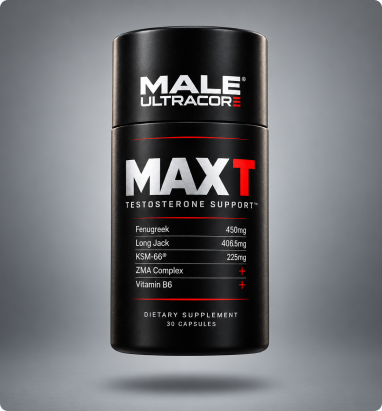
We also identify Max T as a category-matched option from our own range in two clearly marked recommendation sections. That commercial relationship does not change the evidence standard applied to CrazyBulk Testo-Max. Genuine strengths are acknowledged, unresolved details stay unresolved, and no hands-on testing or clinical superiority is invented.
Testo-Max needs a supplement-level assessment
CrazyBulk Testo-Max is marketed with the language of strength, bodybuilding and testosterone support. Its front bottle identifies a strength-and-energy supplement, while the sales page also uses steroid-alternative positioning. The similarity of the marketing theme does not establish a similarity of effect.
The formula is largely built around D-aspartic acid, supported by minerals, vitamins and smaller botanical extracts.
Four capsules are the comparison unit
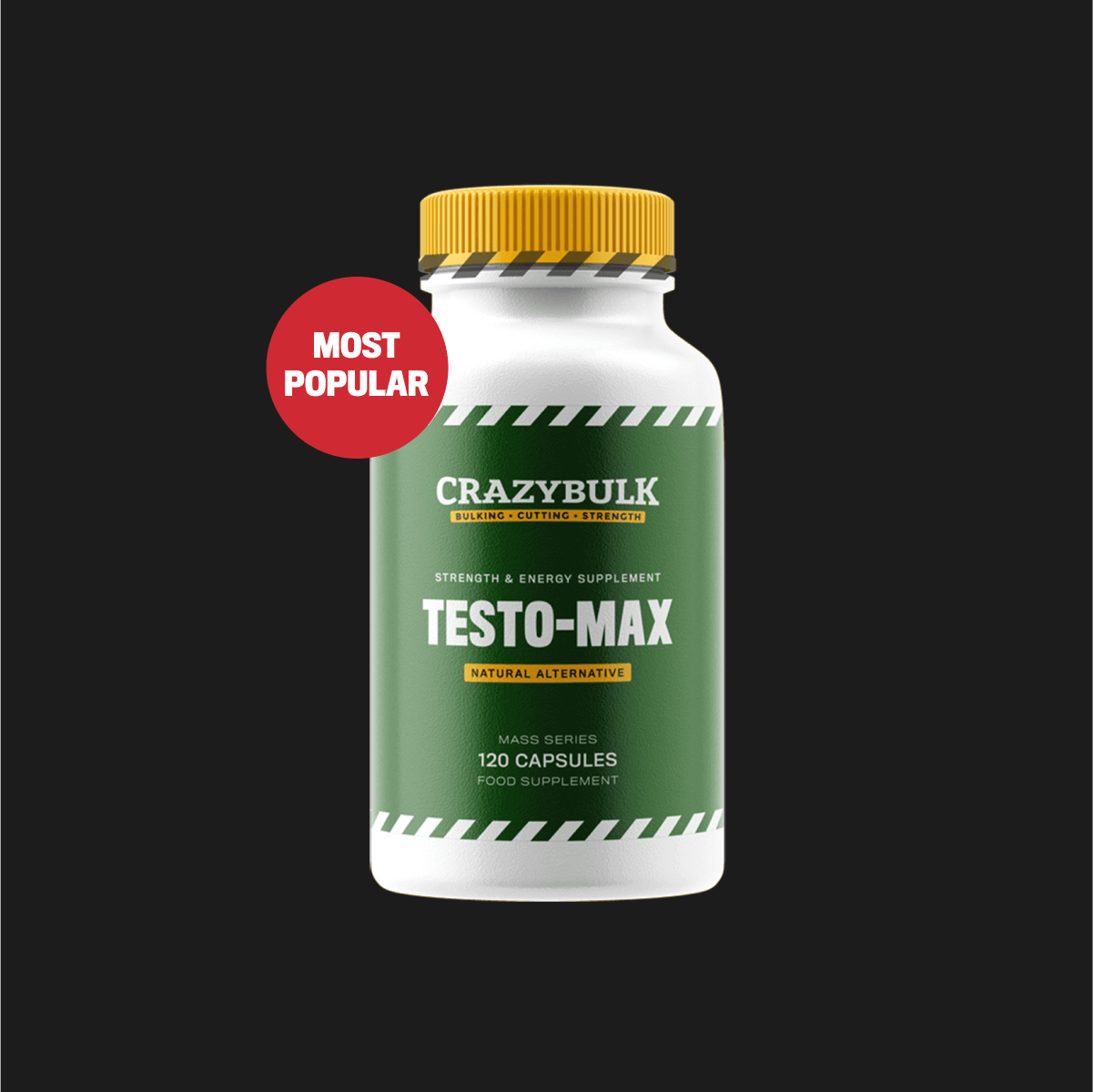
The current directions describe four capsules daily and thirty servings per bottle, consistent with a 120-capsule front packshot. The manufacturer says the daily use applies on training and rest days, with the capsules taken around twenty minutes before breakfast. A bottle’s actual supply is thirty such servings, regardless of the larger capsule number on the front.
The clear ingredient amounts include 2,352 mg D-aspartic acid, 200 mg magnesium, 10 mg vitamin B6 and 10 mg zinc. The formula also lists nettle, Korean red ginseng and fenugreek extracts at 40 mg each, boron at 8 mg and black pepper extract at 5 mg. Extract ratios and standardization, where provided, should accompany those amounts. A 40 mg botanical extract is not automatically equivalent to a larger weight of raw herb, nor can its clinical relevance be judged from that conversion alone.
A fair strength-supplement comparison also separates the training program from the capsule. Improved consistency, additional calories, a new routine or a return from a training break can change performance over the same period someone begins a supplement. A testimonial cannot isolate those influences. That is why the controlled D-aspartic acid studies matter more than a dramatic before-and-after narrative. Testo-Max’s central ingredient has an identifiable research history, but the results in trained men do not support treating steroid-style marketing language as a dependable forecast.
Do not repeat apparent vitamin-unit errors
The current sales-page table contains a significant accuracy problem for anyone reproducing its formula. Vitamin D3 is shown as 50 mg alongside a daily-value percentage inconsistent with that unit, and vitamin K1 is also shown in a unit that conflicts with other available label descriptions. The responsible response is not to guess which number the brand intended and then present the guess as a verified fact. Exact D3 and K1 amounts should be withheld until a trustworthy current package panel resolves them.
This matters because vitamin units are not cosmetic details. Milligrams and micrograms differ by a factor of one thousand. The discrepancy is a fair product-information limitation to mention in proportionate terms. It does not prove that the capsules themselves contain the erroneous amount. It establishes that the accessible web presentation is not sufficient for confidently publishing a complete current nutrient table or giving intake advice.
D-aspartic acid has not delivered consistent training results
Testo-Max’s most substantial ingredient is D-aspartic acid, an amino acid discussed in relation to hormone signaling. Early interest in that pathway does not settle the practical question for men who already train. Published controlled studies in resistance-trained participants have reported no significant testosterone improvement with some regimens, and a longer resistance-training trial did not establish the hoped-for body-composition or strength advantages. A mechanism and an early positive result are not the same thing as reliable product performance.
It would be inaccurate to promise a particular testosterone increase from the 2,352 mg amount or to infer steroid-like gains from the ingredient’s name. It would also go too far to claim no individual could ever notice anything. The defensible conclusion is that the evidence does not justify the strongest bodybuilding expectations. No randomized efficacy trial of the exact Testo-Max finished blend was verified in this research, leaving a gap between the formula’s rationale and its commercial promises.
For heart health, distinguish support from treatment
A cardiovascular-sounding claim can cover very different things: an ingredient mechanism, a small study of a measured marker, an exercise finding or a trial of a complete commercial product. Those are not interchangeable. Evaluate CrazyBulk Testo-Max according to the evidence that actually belongs to it, and keep the result separate from claims about preventing heart attacks, treating hypertension or replacing prescribed medication. A general support label does not establish those medical benefits.
This distinction is equally useful when the reviewed product is a testosterone, sexual-wellness or hair formula rather than a heart-health supplement. Marketing categories do not remove cardiovascular considerations. The complete ingredient list, relevant cautions and existing medicines still matter. If a product is associated with stimulant effects, changes in blood pressure or important interactions, an honest review should preserve that information rather than hide it beneath a positive description of vitality.
What a testosterone-support comparison should establish
A useful testosterone-support review distinguishes normal nutritional support from treatment of a hormonal disorder. A formula may combine minerals, vitamins and botanicals with different kinds of evidence. Some research concerns people with low baseline levels or a particular deficiency; other studies examine selected extracts in small groups. Neither situation justifies promising the same result to everyone. Ingredient research is relevant context, but the complete product, preparation, dose and study population still matter.
More ingredients also mean more comparison work. Check what is individually disclosed, what sits inside a blend and what overlaps with other products. Extract ratios and herb-equivalent numbers need careful reading. A plant name shared between two formulas does not establish matching exposure, and a larger headline quantity does not settle efficacy. If two sources disagree about the current formula, the disagreement should remain visible until the manufacturer resolves it.
For a reader deciding whether to buy, the reasonable conclusion is specific rather than universal. Evaluate the product’s documented strengths, unresolved questions and fit with a realistic routine. If symptoms suggest a possible hormonal issue, discuss appropriate evaluation instead of treating a supplement as a substitute for diagnosis. Our category-matched recommendation offers another label and purchase option to assess; it does not establish that an owned formula raises testosterone more effectively or treats clinically low testosterone.
The rest of the formula adds context, not certainty
Zinc and magnesium are important nutrients, but their inclusion does not prove that adding more will improve hormones in a person whose needs are already met. The same caution applies to the broader vitamin story. Nutrient deficiency, adequate intake and hormone treatment are different subjects.
The botanical ingredients also need extract-specific interpretation. Fenugreek and ginseng research uses particular preparations, doses and populations; a plant name on this label is not enough to claim that every study’s result transfers. Nettle’s presence likewise does not establish a finished-product effect on free testosterone. Piperine has an absorption-related rationale, but increased exposure is not automatically beneficial and can matter for medicines. The useful analysis asks what each ingredient contributes to the plausibility and uncertainty of the formula, rather than counting the longest ingredient list as the winner.
The vitamin-unit issue is unusually concrete. It is possible for a website table to contain a transcription problem while the physical package uses appropriate units; the accessible information does not settle that question here. The sensible step is to check the current bottle panel, not infer an extreme nutrient exposure from a likely error or quietly change the unit without evidence. That approach protects against both an unfair accusation about the product and misleading dosing information. Formula accuracy deserves more weight than making a comparison table look complete.
Value depends on more than a bundle offer
CrazyBulk promotes single bottles and multi-bottle offers. A discount can change the amount paid per serving, but it cannot strengthen the underlying efficacy evidence. The fairest value calculation begins with the number of full four-capsule servings, the current total cost and the actual purchase conditions.
The four-capsule daily burden is part of that practical comparison. Some buyers may prefer one product with several ingredients; others may not want that many capsules or the overlap with an existing multivitamin. Gelatin appears in the other-ingredient list, so a vegetarian or vegan reader needs a different suitability assessment. The current packshot selected for identification shows the actual front bottle; an older metadata image displayed a different rear-panel presentation. Matching the reviewed version to the image is more useful than recycling whichever bottle image a page happens to expose first.
A sensible safety discussion stays specific
Buyers need the actual label checked. Vitamin K exposure also matters for warfarin management, while boron and minerals can accumulate when multiple hormone-support products are combined. These are concrete considerations, not a generalized statement that every natural ingredient is dangerous or that supplements are interchangeable with prescription medicines.
Fenugreek, ginseng and piperine also warrant a medication review where relevant, especially when a reader is managing glucose, blood pressure or other chronic treatment. Persistent fatigue, low libido or erectile difficulty should not automatically be attributed to low testosterone. An honest review can keep that point concise while avoiding a marketing trap in which Testo-Max’s uncertainties are used to imply that a promoted alternative needs no precautions. The same questions about ingredients, total intake, medicines and appropriate medical evaluation belong in both halves of the comparison.
The smaller botanical entries should also be interpreted in their actual context. A disclosed extract ratio may explain why a plant-extract amount looks small, but it cannot establish equivalence to every published trial or another manufacturer’s preparation. Likewise, adding piperine does not make all other ingredients clinically validated. The individual label details help identify what is being purchased; they do not turn the formula into a proven hormone treatment. That distinction remains relevant whether the purchase is a single bottle or a discounted multi-bottle package.
The fair verdict and a category-matched comparison
Testo-Max is a disclosed, D-aspartic-acid-led testosterone-support formula with clear capsule and serving counts. Its weaknesses are meaningful: mixed evidence for the central ingredient in trained men, no verified trial of the complete retail formula and unresolved vitamin-unit problems in its current web table. The steroid-alternative language should be treated as marketing positioning, not a demonstrated clinical comparison. Those conclusions are strong enough to be useful without inventing personal testing, unfavorable customer experiences or a score that has no transparent basis.
Compare the active question, not just the biggest number
In a beetroot comparison, total beet material is not the same measurement as nitrate content. Elsewhere, the weight of a plant extract does not necessarily reveal the amount of a particular active constituent. The common lesson is to identify what a number represents before using it to compare products. A high herb-equivalent figure can be perfectly legitimate labeling while still answering a different question from the amount of extract physically present in a serving.
A careful cardiovascular buying decision also accounts for the person using the product. Keep a list of medicines and supplements, and discuss relevant precautions before adding a formula when you have heart or blood-pressure concerns. The owned alternative recommended in this review should face the same test as the competitor: verified label details, relevant evidence, realistic expectations and a role alongside appropriate care. A commercial recommendation does not establish equal formulations or superior clinical results.
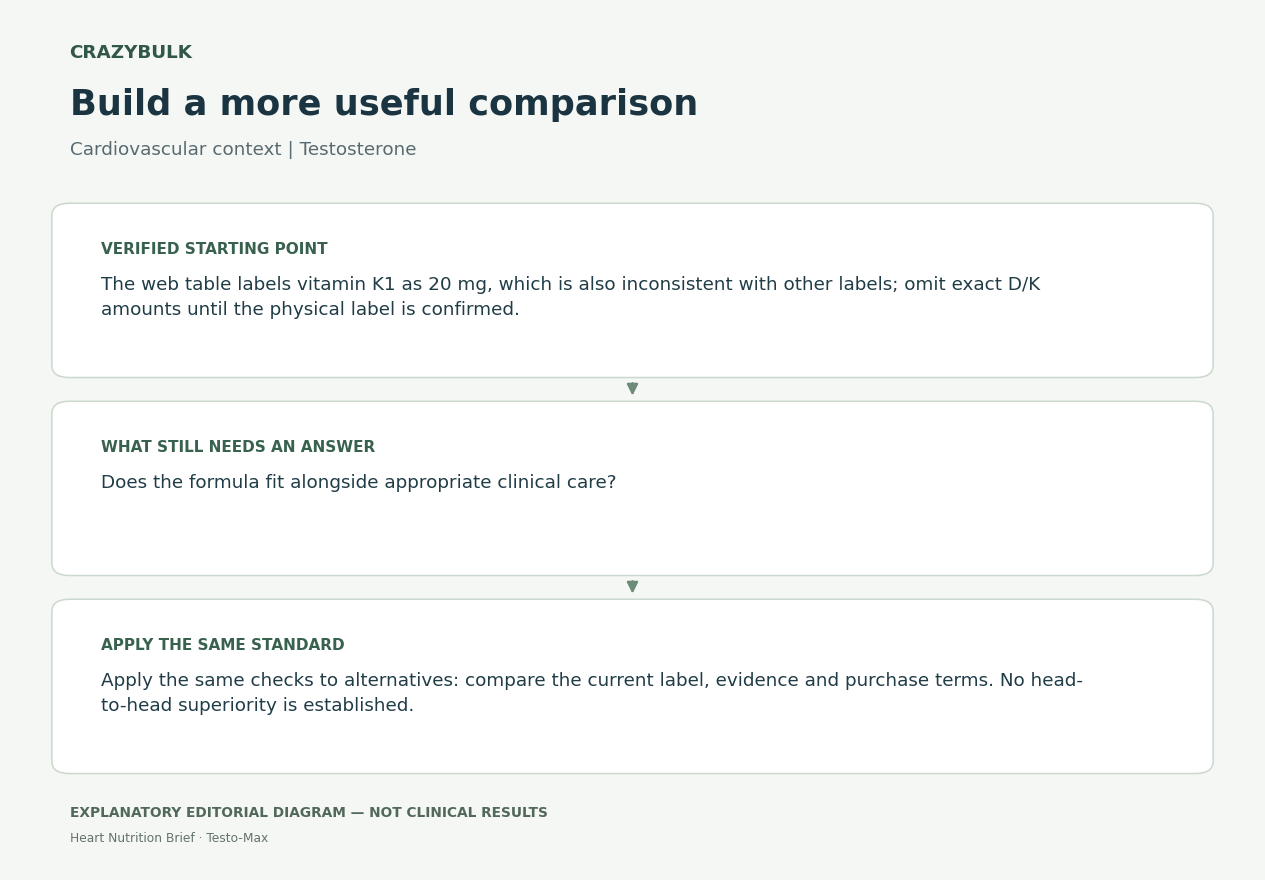
How to compare CrazyBulk Testo-Max with Max T
Start with the actual goal rather than a presumed winner. CrazyBulk Testo-Max and Max T deserve a comparison of their present product or service details, the kind of evidence available and the practical routine involved. Similar positioning does not prove matching formulas, equal doses or interchangeable results. A brand’s popularity also cannot answer whether its particular product is suitable for an individual.
Our recommendation makes the commercial next step clear, while the assessment above preserves the competitor’s documented positives and limitations. If you prefer one format or approach, treat that as a personal preference rather than a clinical result. Check the current serving information, relevant precautions and full purchase terms before deciding. Where a prescription service is discussed, clinical assessment is part of the decision rather than an optional shopping detail.
The verdict: choose for fit, evidence and a realistic routine
The strongest reason to consider CrazyBulk Testo-Max is the combination of documented features described in this review and a goal that actually matches its category. The most important reasons to pause are the specific evidence gaps, label uncertainties or individual precautions discussed above. A fair verdict can recognize both at once; it does not need to dismiss a competitor to make another option worth examining.
For a category-matched next step, the recommendation below highlights Max T from our range. Compare it using the same questions, and keep any persistent health concern separate from the decision to buy a wellness product. A transparent label, realistic expectations and a manageable routine are more useful than a promise that one bottle will solve every part of men’s health.
Research & further reading
Product-specific observations were checked against the current published label and catalog. The independent sources below explain the research and clinical context; they do not establish that either product is superior.
- Systematic review of proposed testosterone boosters
- Three and six grams of D-aspartic acid in resistance-trained men
- D-aspartic acid and three months of resistance training: randomized trial
- NIH ODS: Zinc health professional fact sheet
- NIH ODS: Vitamin D health professional fact sheet
- NIH ODS: Boron health professional fact sheet
Continue reading
Our Max T review · More on testosterone · All product reviews