Horbäach Longjack Tongkat Ali Review: Heart-Health Considerations
Label-based review of Horbäach Longjack Tongkat Ali: Longjack root20:1 extract, cardiovascular precautions and what the supporting research can—and cannot—show.
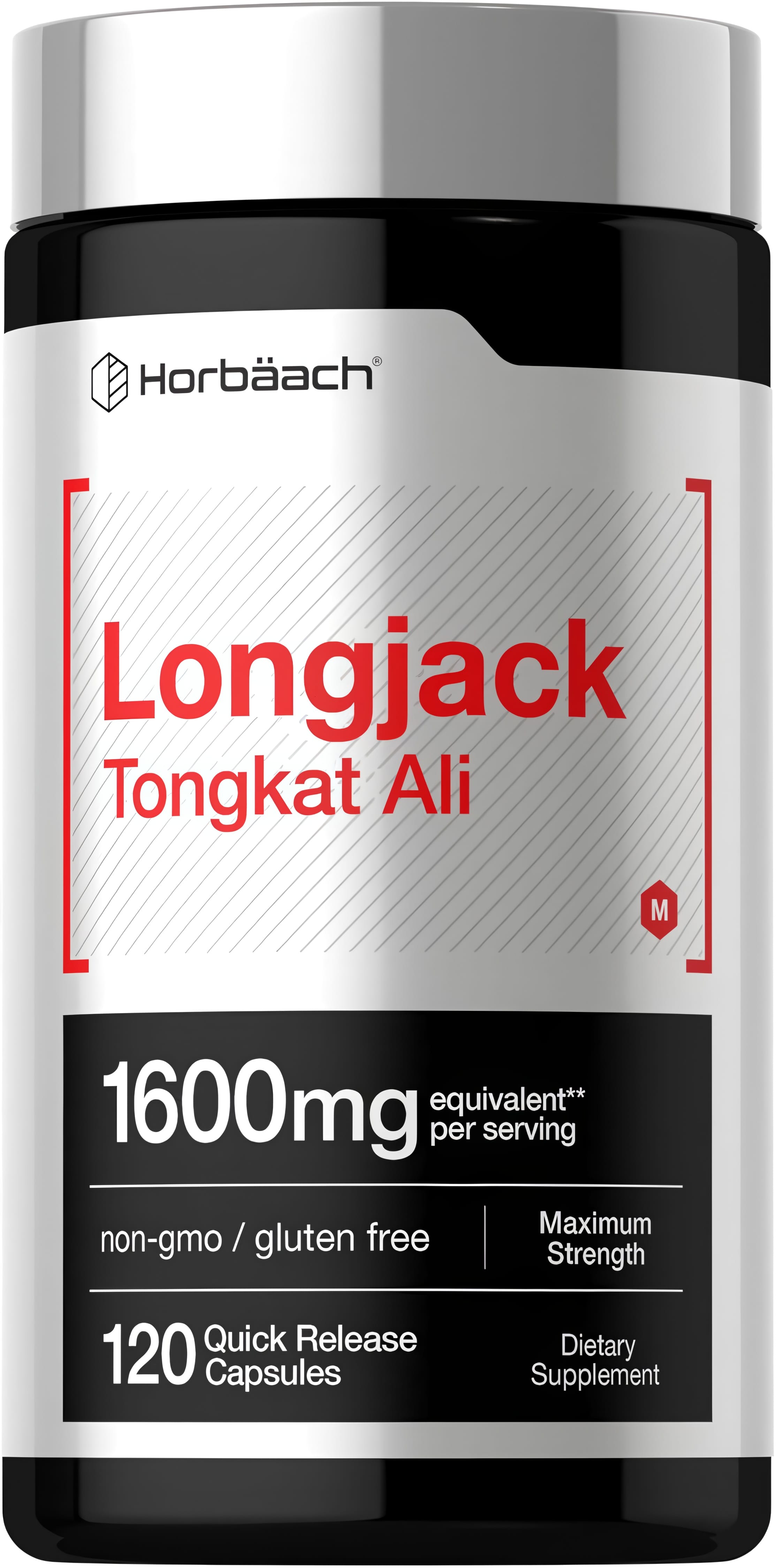
Horbäach Longjack Tongkat Ali makes a useful case study in how supplement labels can look more dramatic than the material inside a serving. The front-facing 1,600 mg figure is a root-equivalent statement. The actual Supplement Facts panel lists 80 mg of a 20:1 longjack root extract per two-capsule serving. The explanation is printed on the label; the distinction still matters whenever this product is compared with another bottle using a different preparation.
Published-label and research assessment. We checked current catalog information, available Supplement Facts images and linked scientific sources. No personal use, independent laboratory testing or head-to-head trial is claimed. Two promotional recommendations concern products or services sold by the owner of this publication.
Is Horbäach Longjack Tongkat Ali 1600 mg equivalent the right fit for your goal?
Horbäach Longjack Tongkat Ali 1600 mg equivalent is worth evaluating for its actual formula and current label, rather than its reputation alone. This review looks at circulation and safety context: what is documented, where the evidence is limited, and which practical questions matter before a purchase. The aim is a useful decision, not a score assembled from promotional claims.
We also identify Myogentra as a category-matched option from our own range in two clearly marked recommendation sections. That commercial relationship does not change the evidence standard applied to Horbäach Longjack Tongkat Ali 1600 mg equivalent. Genuine strengths are acknowledged, unresolved details stay unresolved, and no hands-on testing or clinical superiority is invented.
Start by reading the small number
Horbäach Longjack Tongkat Ali makes a useful case study in how supplement labels can look more dramatic than the material inside a serving. The front-facing 1,600 mg figure is a root-equivalent statement. The actual Supplement Facts panel lists 80 mg of a 20:1 longjack root extract per two-capsule serving. The explanation is printed on the label; the distinction still matters whenever this product is compared with another bottle using a different preparation.
The current 120-capsule formula deserves that level of precision before any potency comparison. Calling it 1,600 mg of tongkat extract would inflate the actual extract mass twentyfold. Calling the equivalence deceptive without acknowledging the printed explanation would also be unfair. The honest assessment is more useful: the bottle supplies a defined amount of a concentrated root extract, and the shopper needs to understand what that amount can reasonably be compared with.
A simple formula with a clear serving count
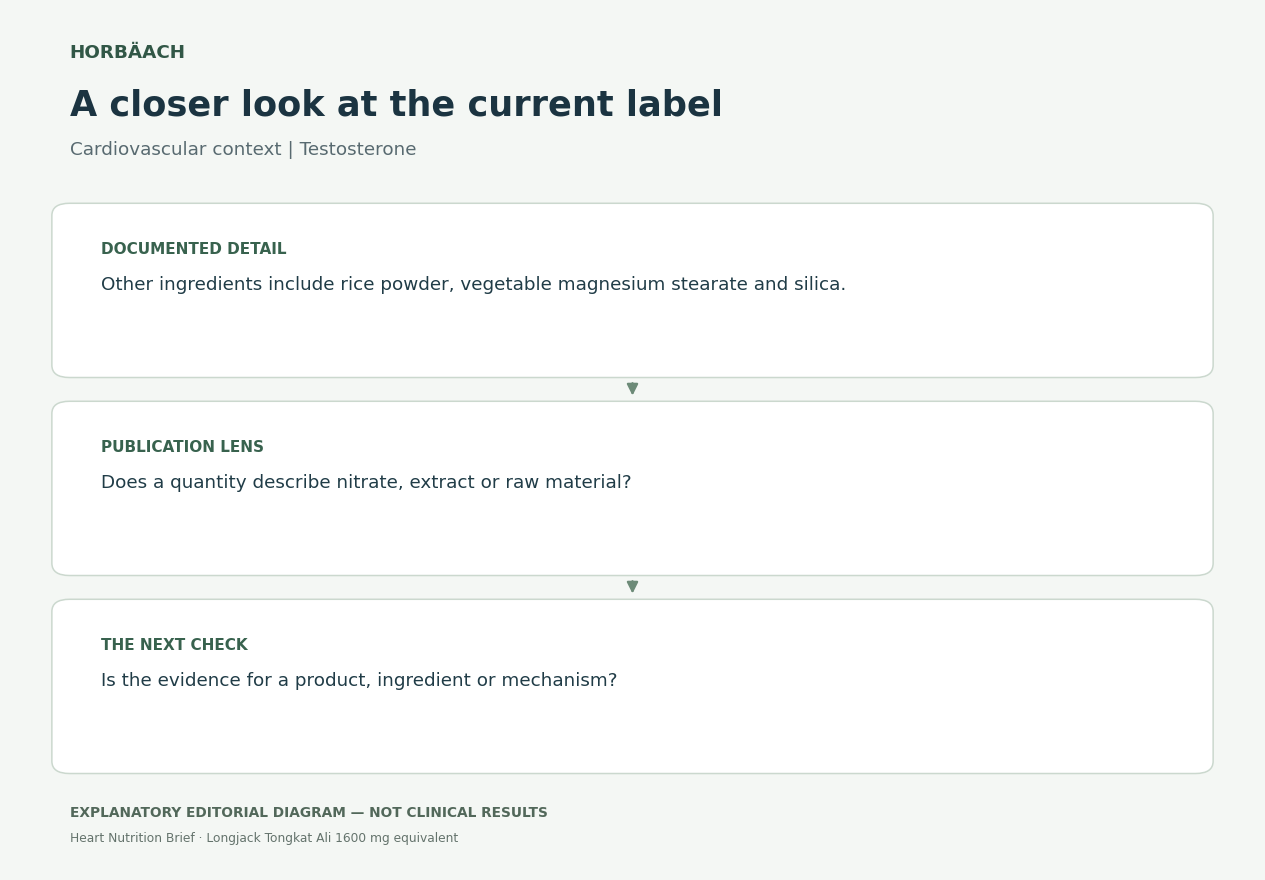
The formula centers on Eurycoma longifolia Jack root extract. Two quick-release capsules make one serving, and the 120-count bottle provides 60 servings at the labeled schedule. The directions say to take two daily, preferably with a meal. Rice powder, gelatin capsule, vegetable magnesium stearate, and silica appear among the other ingredients. The gelatin means this particular product should not be described as vegan, even though several dietary-exclusion icons appear elsewhere on the page.
A single-botanical approach has a practical advantage: it avoids asking a buyer to untangle a dozen active ingredients before checking for overlap with an existing routine. It also makes clear what is missing. The photographed panel does not specify an eurycomanone percentage, a branded clinical extract, or a quantified profile of other constituents. The simplicity helps with ingredient identification, while the limited chemical detail constrains the strength of any efficacy comparison.
Why root equivalence is not a universal potency scale
Root-equivalent arithmetic can explain how much starting herb a manufacturer says went into an extract. It cannot determine how that extract will act in a person. Extraction conditions affect which constituents remain, and the same root equivalent can correspond to different chemical profiles. A 20:1 product is not automatically one tenth as effective as a 200:1 product, and its 1,600 mg equivalence cannot fairly be compared with 1,000 mg of actual extract as if both numbers measured the same thing.
For a consumer, the best response is to compare like with like. First identify actual extract mass per daily serving. Then look for marker standardization, relevant testing, and a connection to a studied preparation. Where those details are unavailable, the comparison remains incomplete and cannot support a firm potency ranking. An incomplete comparison cannot support a decisive potency ranking based only on those numbers. In this case, acknowledging the 80 mg amount and the missing marker percentage is much more informative than repeating the largest number on the front.
The ingredient has human research, but this bottle is different
Tongkat ali has attracted human research, including a meta-analysis reporting potential testosterone effects in some groups. That gives the category a plausible research basis worth discussing. It does not demonstrate that all tongkat products, or all men taking them, experience the same benefit. Trials differ in the extract used, the health of the participants, the starting testosterone level, and the period over which outcomes are measured. These differences matter when evaluating a relatively low actual extract mass with no disclosed marker assay.
No randomized trial of the finished Horbäach Longjack formula was identified in this research. That absence is an evidence limitation, rather than proof that the product cannot do anything. Conversely, it prevents a reviewer from promising clinically established changes in testosterone, desire, erections, or performance. A consumer interested specifically in a study-tested preparation would need more extract detail than this label currently supplies. Research on a botanical name is context; a matching finished-product trial would be stronger evidence.
For heart health, distinguish support from treatment
A cardiovascular-sounding claim can cover very different things: an ingredient mechanism, a small study of a measured marker, an exercise finding or a trial of a complete commercial product. Those are not interchangeable. Evaluate Horbäach Longjack Tongkat Ali 1600 mg equivalent according to the evidence that actually belongs to it, and keep the result separate from claims about preventing heart attacks, treating hypertension or replacing prescribed medication. A general support label does not establish those medical benefits.
This distinction is equally useful when the reviewed product is a testosterone, sexual-wellness or hair formula rather than a heart-health supplement. Marketing categories do not remove cardiovascular considerations. The complete ingredient list, relevant cautions and existing medicines still matter. If a product is associated with stimulant effects, changes in blood pressure or important interactions, an honest review should preserve that information rather than hide it beneath a positive description of vitality.
What a testosterone-support comparison should establish
A useful testosterone-support review distinguishes normal nutritional support from treatment of a hormonal disorder. A formula may combine minerals, vitamins and botanicals with different kinds of evidence. Some research concerns people with low baseline levels or a particular deficiency; other studies examine selected extracts in small groups. Neither situation justifies promising the same result to everyone. Ingredient research is relevant context, but the complete product, preparation, dose and study population still matter.
More ingredients also mean more comparison work. Check what is individually disclosed, what sits inside a blend and what overlaps with other products. Extract ratios and herb-equivalent numbers need careful reading. A plant name shared between two formulas does not establish matching exposure, and a larger headline quantity does not settle efficacy. If two sources disagree about the current formula, the disagreement should remain visible until the manufacturer resolves it.
For a reader deciding whether to buy, the reasonable conclusion is specific rather than universal. Evaluate the product’s documented strengths, unresolved questions and fit with a realistic routine. If symptoms suggest a possible hormonal issue, discuss appropriate evaluation instead of treating a supplement as a substitute for diagnosis. Our category-matched recommendation offers another label and purchase option to assess; it does not establish that an owned formula raises testosterone more effectively or treats clinically low testosterone.
The strongest selling points are practical
The two-month labeled supply and short active-ingredient list are the most tangible features. People who dislike large blends may appreciate being able to identify one botanical. The official page also describes a non-GMO formula and lists exclusions such as gluten, wheat, milk, lactose, and certain artificial additives. These may help someone shop according to dietary preferences, but they do not prove a testosterone effect or show that the product is appropriate for every medical situation.
Horbäach describes its manufacturing and testing standards, which is useful as a starting point for quality questions. A general claim of laboratory testing is less informative than a current lot report that identifies what was tested, which methods were used, and what the results were. Manufacturer quality language does not itself constitute an independent laboratory endorsement of this finished product. The same standard applies to any alternative sold by the publisher: a familiar brand name and a quality slogan are not substitutes for evidence.
Safety and suitability need an individual check
Choosing a simple formula does not make an active herb automatically suitable. Someone taking medication or managing a medical condition should discuss the exact supplement with a qualified professional. The relevant question is the actual product and the person’s situation, rather than a general assumption that all natural products are either safe or dangerous. Long-term use is another uncertainty, because many ingredient studies are much shorter than the months or years a consumer might use a daily supplement.
The NIH LiverTox discussion and the EFSA opinion on a specified tongkat extract show why evidence must remain preparation-specific. Neither establishes a direct clinical verdict for this exact Horbäach bottle. Their value is to discourage blanket safety claims and casual dose escalation. A user should not increase the number of capsules to imitate the milligram amount of a different extract. That could increase exposure without reproducing the study material, and it ignores the serving directions that make this product’s cost and supply calculations meaningful.
A useful alternative comparison stays in the same category
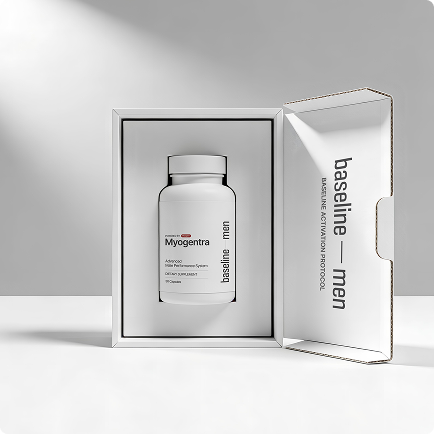
The appropriate comparison is another men’s vitality or testosterone-support supplement with a transparent current panel. Myogentra is one publisher-owned option in that space, but category overlap should not be presented as proof of superior effects. The useful differences are what each product contains, how the schedule differs, and what information is available about the finished product. Readers should be able to tell which statements are factual observations and which recommendation boxes are promotional.
For Horbäach, the main decision is whether a modest, simple tongkat extract is the format the buyer actually wants. A broader blend may be attractive to someone seeking several ingredients in one routine; it may be less attractive to someone trying to minimize complexity. Neither preference settles the efficacy question. Meaningful value also depends on the final cost per daily serving, purchase terms, and whether any available batch documentation answers the questions that matter to the buyer. Root-equivalent size alone is a poor deciding factor.
The fair verdict on this 120-count bottle
Horbäach Longjack is a straightforward, gelatin-capsule botanical product whose actual dose is much easier to understand after reading the facts panel than after glancing at the headline. Its disclosed 80 mg extract amount, 20:1 ratio, and 60-serving supply make the basic format auditable. The lack of eurycomanone standardization and product-specific trial evidence are the most important limits. Those points support a restrained assessment instead of either an enthusiastic clinical promise or a negative verdict based only on branding.
It may suit an informed adult who specifically prefers a simple longjack formula and accepts the evidence gaps. It is a poor fit for someone looking for a proven remedy for testosterone deficiency or erectile dysfunction. Persistent fatigue, low desire, or sexual changes deserve investigation rather than an endless sequence of capsule substitutions. Buying a supplement, selecting a standardized extract, and receiving treatment for a diagnosed condition are three different decisions, even when they begin with the same symptoms or shopping interest.
Compare the active question, not just the biggest number
In a beetroot comparison, total beet material is not the same measurement as nitrate content. Elsewhere, the weight of a plant extract does not necessarily reveal the amount of a particular active constituent. The common lesson is to identify what a number represents before using it to compare products. A high herb-equivalent figure can be perfectly legitimate labeling while still answering a different question from the amount of extract physically present in a serving.
A careful cardiovascular buying decision also accounts for the person using the product. Keep a list of medicines and supplements, and discuss relevant precautions before adding a formula when you have heart or blood-pressure concerns. The owned alternative recommended in this review should face the same test as the competitor: verified label details, relevant evidence, realistic expectations and a role alongside appropriate care. A commercial recommendation does not establish equal formulations or superior clinical results.
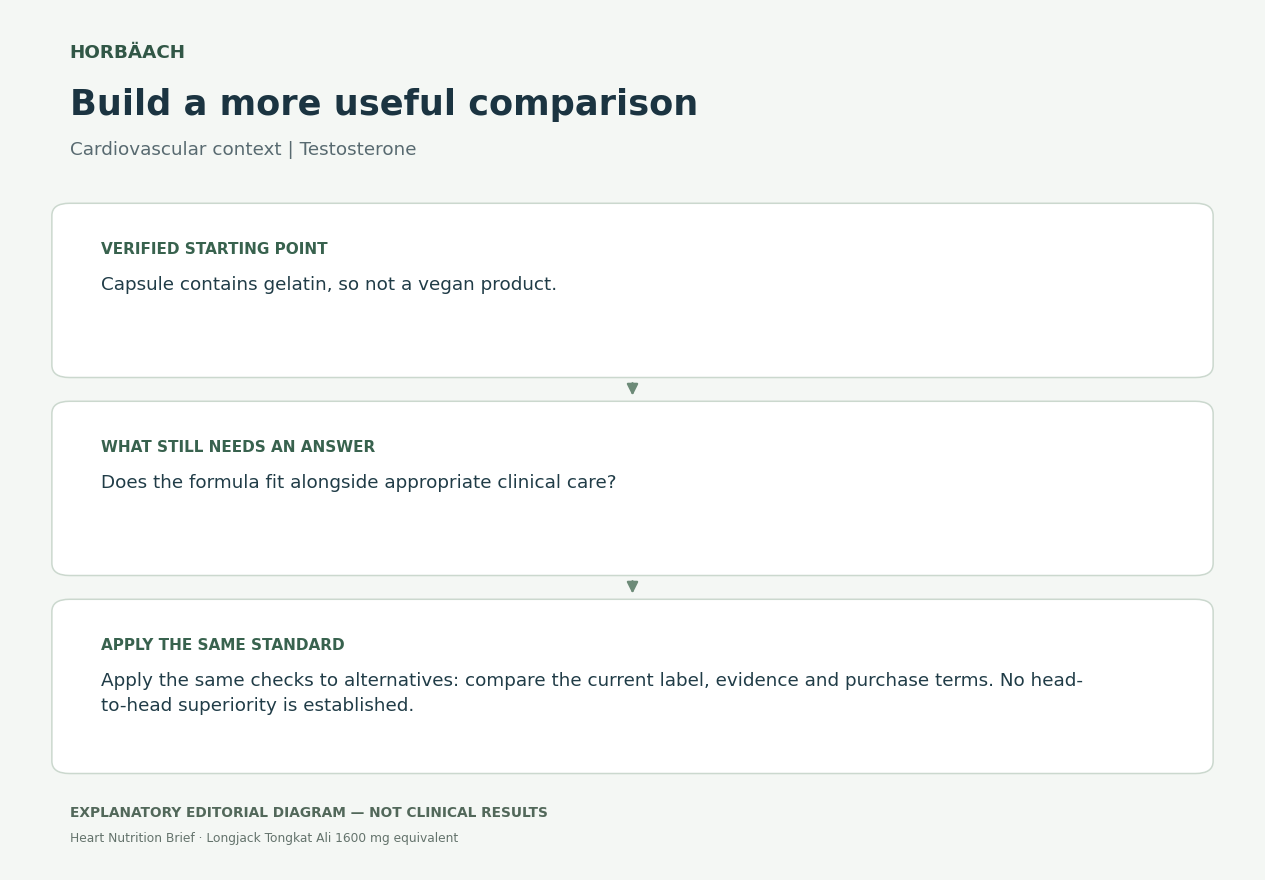
How to compare Horbäach Longjack Tongkat Ali 1600 mg equivalent with Myogentra
Start with the actual goal rather than a presumed winner. Horbäach Longjack Tongkat Ali 1600 mg equivalent and Myogentra deserve a comparison of their present product or service details, the kind of evidence available and the practical routine involved. Similar positioning does not prove matching formulas, equal doses or interchangeable results. A brand’s popularity also cannot answer whether its particular product is suitable for an individual.
Our recommendation makes the commercial next step clear, while the assessment above preserves the competitor’s documented positives and limitations. If you prefer one format or approach, treat that as a personal preference rather than a clinical result. Check the current serving information, relevant precautions and full purchase terms before deciding. Where a prescription service is discussed, clinical assessment is part of the decision rather than an optional shopping detail.
The verdict: choose for fit, evidence and a realistic routine
The strongest reason to consider Horbäach Longjack Tongkat Ali 1600 mg equivalent is the combination of documented features described in this review and a goal that actually matches its category. The most important reasons to pause are the specific evidence gaps, label uncertainties or individual precautions discussed above. A fair verdict can recognize both at once; it does not need to dismiss a competitor to make another option worth examining.
For a category-matched next step, the recommendation below highlights Myogentra from our range. Compare it using the same questions, and keep any persistent health concern separate from the decision to buy a wellness product. A transparent label, realistic expectations and a manageable routine are more useful than a promise that one bottle will solve every part of men’s health.
Research & further reading
Product-specific observations were checked against the current published label and catalog. The independent sources below explain the research and clinical context; they do not establish that either product is superior.
Continue reading
Our Myogentra review · More on testosterone · All product reviews