Hunter Evolve Hunter Test Review: Heart-Health Considerations
Label-based review of Hunter Evolve Hunter Test: D-aspartic acid, cardiovascular precautions and what the supporting research can—and cannot—show.
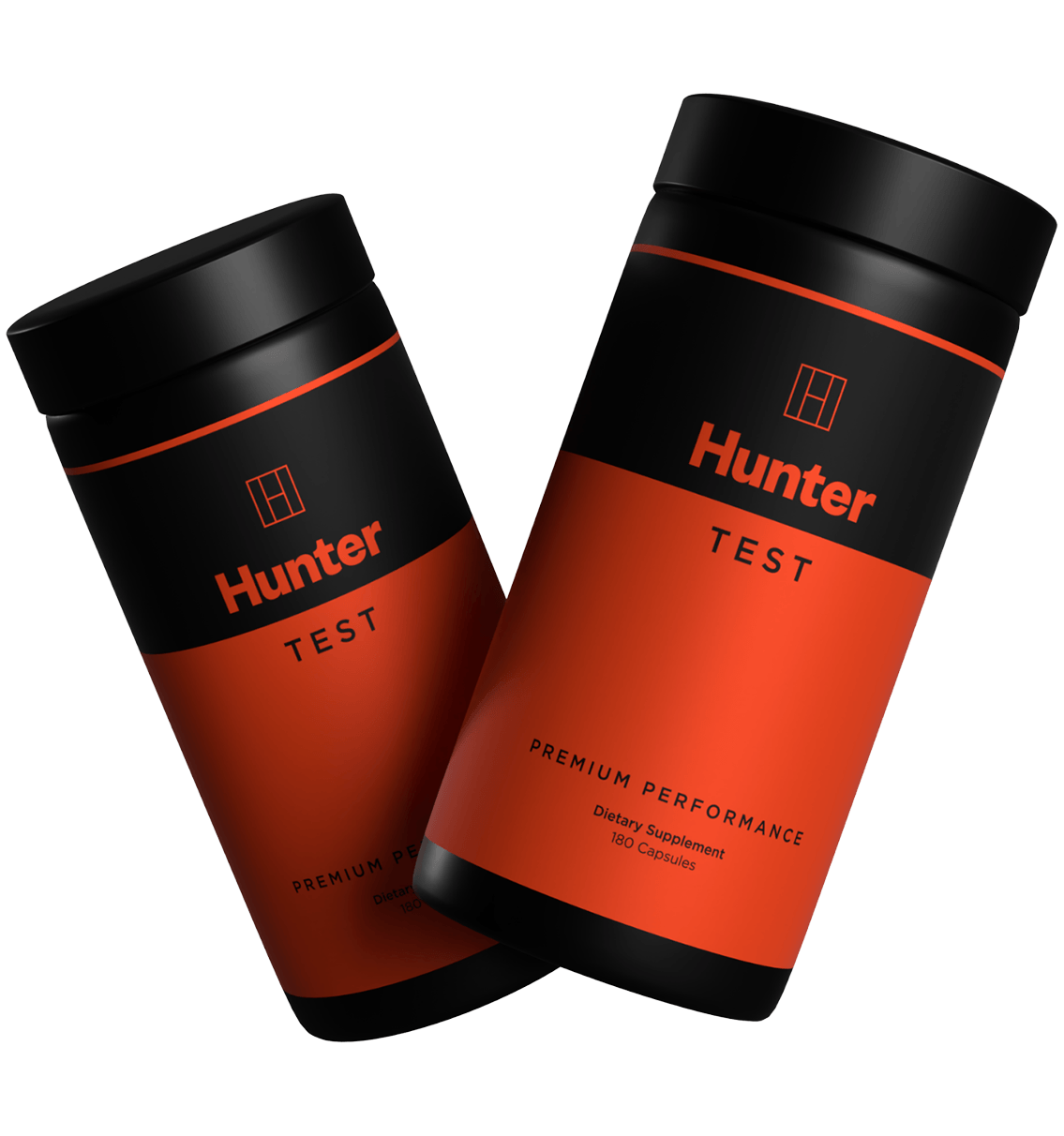
Hunter Test has a straightforward identity: it is a nine-active testosterone-support supplement marketed to men who want a comprehensive formula. The orange-and-black product image shows 180 capsules, but the advertised daily serving is six capsules. That makes the bottle a thirty-serving purchase. Readers comparing bottle sizes should start there, because a high capsule count does not automatically mean a longer supply or a lower daily cost.
Published-label and research assessment. We checked current catalog information, available Supplement Facts images and linked scientific sources. No personal use, independent laboratory testing or head-to-head trial is claimed. Two promotional recommendations concern products or services sold by the owner of this publication.
Is Hunter Evolve Hunter Test the right fit for your goal?
Hunter Evolve Hunter Test is worth evaluating for its actual formula and current label, rather than its reputation alone. This review looks at circulation and safety context: what is documented, where the evidence is limited, and which practical questions matter before a purchase. The aim is a useful decision, not a score assembled from promotional claims.
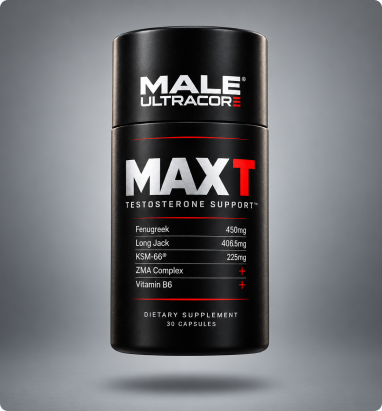
We also identify Max T as a category-matched option from our own range in two clearly marked recommendation sections. That commercial relationship does not change the evidence standard applied to Hunter Evolve Hunter Test. Genuine strengths are acknowledged, unresolved details stay unresolved, and no hands-on testing or clinical superiority is invented.
Hunter Test is built around a substantial daily serving
Hunter Test has a straightforward identity: it is a nine-active testosterone-support supplement marketed to men who want a comprehensive formula. The orange-and-black product image shows 180 capsules, but the advertised daily serving is six capsules. That makes the bottle a thirty-serving purchase. Readers comparing bottle sizes should start there, because a high capsule count does not automatically mean a longer supply or a lower daily cost.
The formula combines D-aspartic acid with vitamin D3, vitamin K2, magnesium, zinc, ginseng, ashwagandha, indole-3-carbinol and boron. It therefore belongs in the same broad comparison category as Max T or Myogentra, rather than with protein powder or general multivitamins. Its appeal is a disclosed, wide-ranging ingredient list. Its main trade-offs are the capsule burden, substantial nutrient amounts and the need to distinguish ingredient research from evidence that the complete formula reliably changes how a man feels or performs.
Use the actual regional label, not a blended internet formula
The US ingredient table retrieved for this dossier lists magnesium as magnesium aspartate, zinc as zinc aspartate, ashwagandha standardized to five percent withanolides and boron as an amino-acid chelate. Other indexed regional tables show different mineral forms and a different ashwagandha percentage. Combining those details into one supposedly definitive formula would create a label that may not exist.
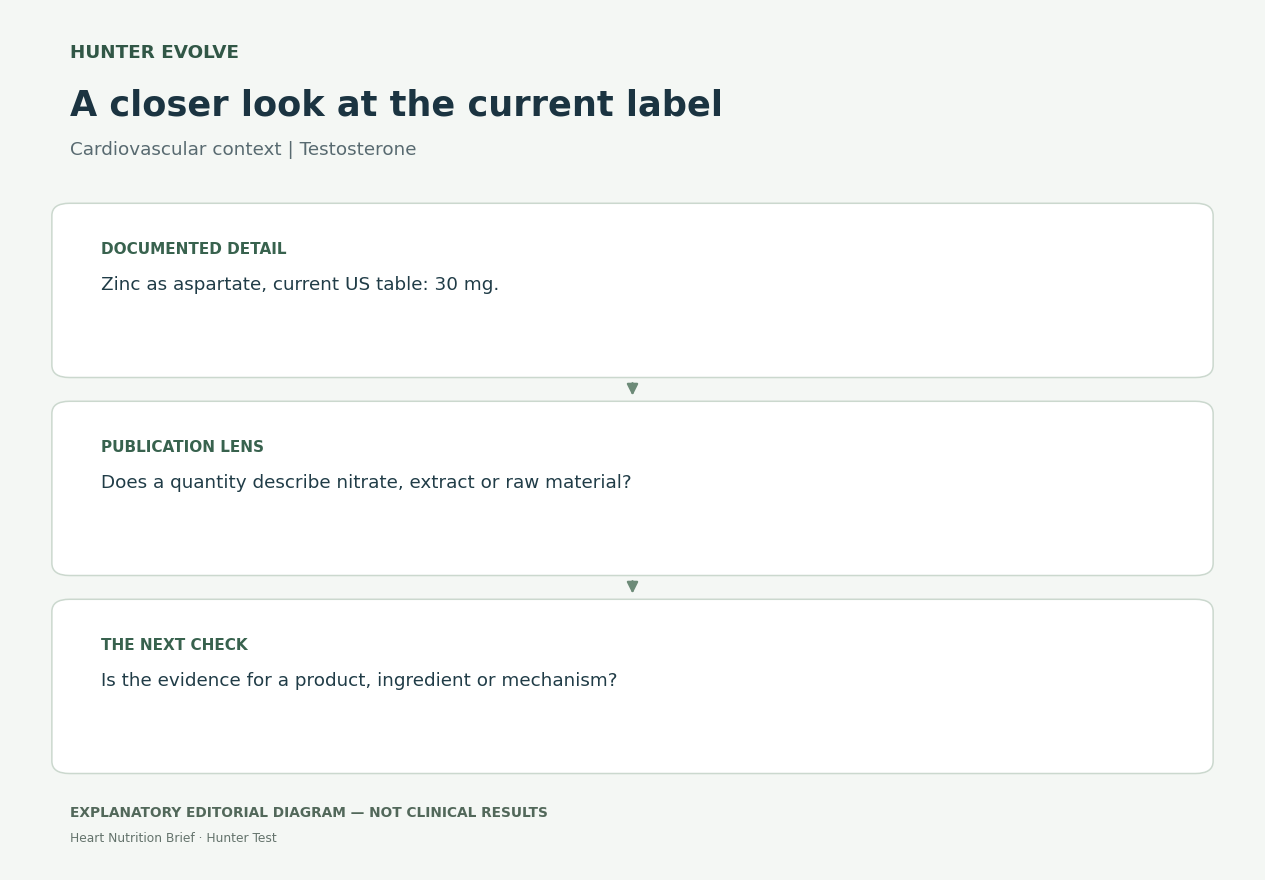
The stable headline amounts in the current US table include 3,000 mg D-aspartic acid, 300 mg ginseng, 300 mg ashwagandha and 200 mg indole-3-carbinol per six-capsule serving. Vitamin D3 is listed at 5,000 IU, K2 at 150 mcg, magnesium at 200 mg, zinc at 30 mg and boron at 10 mg. This is a practical accuracy issue, not evidence that one regional version is inherently better.
The six-capsule serving makes an inventory of existing supplements especially helpful. A separate vitamin D product, a zinc-containing multivitamin and a hormone blend can all contribute to the same totals without looking similar on the shelf. Hunter’s 5,000 IU vitamin D amount is already substantial on its own, while its zinc and boron add further considerations. The decision is therefore about the combined routine, not simply whether the bottle contains recognizable nutrients. A clinician-directed deficiency plan is also different from taking a high-dose combination as a general vitality experiment.
D-aspartic acid deserves a mixed-evidence explanation
The large D-aspartic acid amount is central to Hunter Test’s design. It gives the formula a clear connection to the history of testosterone-booster marketing, in which early findings are often repeated as though every later study reached the same result. The published literature is more complicated. Trials in resistance-trained men have not consistently found increases in testosterone, and some work has examined whether higher amounts might even have different effects from lower amounts.
That does not justify saying D-aspartic acid never affects anyone. A trial involving untrained participants, men with different starting hormone levels or a different regimen cannot establish what this full retail formula will do for a healthy lifter. Hunter Test’s disclosed dose is useful information; the scientific interpretation should remain separate from the impressive-looking number.
The vitamin D amount is a meaningful purchasing consideration
The 5,000 IU vitamin D3 serving is one of the most concrete reasons to look at Hunter Test in the context of a person’s entire routine. NIH guidance places the general adult upper intake level at 4,000 IU daily unless a healthcare professional is managing a different intake for a medical reason. The Hunter amount exceeds that general limit even before another vitamin D supplement or multivitamin is counted.
This is not a claim that one serving necessarily produces toxicity, nor an instruction to stop prescribed treatment. It is a reason not to describe the formula as automatically suitable for every man simply because the ingredients are nutrients. Vitamin D status, medical history, other supplements and any clinician-directed regimen matter. A high dose can be appropriate in a particular treatment plan without being a sensible default for a general testosterone-support comparison. That nuance should stay visible rather than being hidden behind a broad statement that more vitamin D means more testosterone.
For heart health, distinguish support from treatment
A cardiovascular-sounding claim can cover very different things: an ingredient mechanism, a small study of a measured marker, an exercise finding or a trial of a complete commercial product. Those are not interchangeable. Evaluate Hunter Evolve Hunter Test according to the evidence that actually belongs to it, and keep the result separate from claims about preventing heart attacks, treating hypertension or replacing prescribed medication. A general support label does not establish those medical benefits.
This distinction is equally useful when the reviewed product is a testosterone, sexual-wellness or hair formula rather than a heart-health supplement. Marketing categories do not remove cardiovascular considerations. The complete ingredient list, relevant cautions and existing medicines still matter. If a product is associated with stimulant effects, changes in blood pressure or important interactions, an honest review should preserve that information rather than hide it beneath a positive description of vitality.
What a testosterone-support comparison should establish
A useful testosterone-support review distinguishes normal nutritional support from treatment of a hormonal disorder. A formula may combine minerals, vitamins and botanicals with different kinds of evidence. Some research concerns people with low baseline levels or a particular deficiency; other studies examine selected extracts in small groups. Neither situation justifies promising the same result to everyone. Ingredient research is relevant context, but the complete product, preparation, dose and study population still matter.
More ingredients also mean more comparison work. Check what is individually disclosed, what sits inside a blend and what overlaps with other products. Extract ratios and herb-equivalent numbers need careful reading. A plant name shared between two formulas does not establish matching exposure, and a larger headline quantity does not settle efficacy. If two sources disagree about the current formula, the disagreement should remain visible until the manufacturer resolves it.
For a reader deciding whether to buy, the reasonable conclusion is specific rather than universal. Evaluate the product’s documented strengths, unresolved questions and fit with a realistic routine. If symptoms suggest a possible hormonal issue, discuss appropriate evaluation instead of treating a supplement as a substitute for diagnosis. Our category-matched recommendation offers another label and purchase option to assess; it does not establish that an owned formula raises testosterone more effectively or treats clinically low testosterone.
Zinc, magnesium, K2 and boron do different jobs
Hunter Test’s mineral and vitamin components should not be presented as interchangeable hormone boosters. Zinc is necessary for normal physiology, but correcting low intake is different from pushing testosterone above a person’s normal range. At 30 mg per serving, the zinc amount also makes supplement stacking relevant, especially against the general adult upper intake level of 40 mg from all sources. Magnesium contributes to normal function, but its presence does not establish a unique finished-product effect.
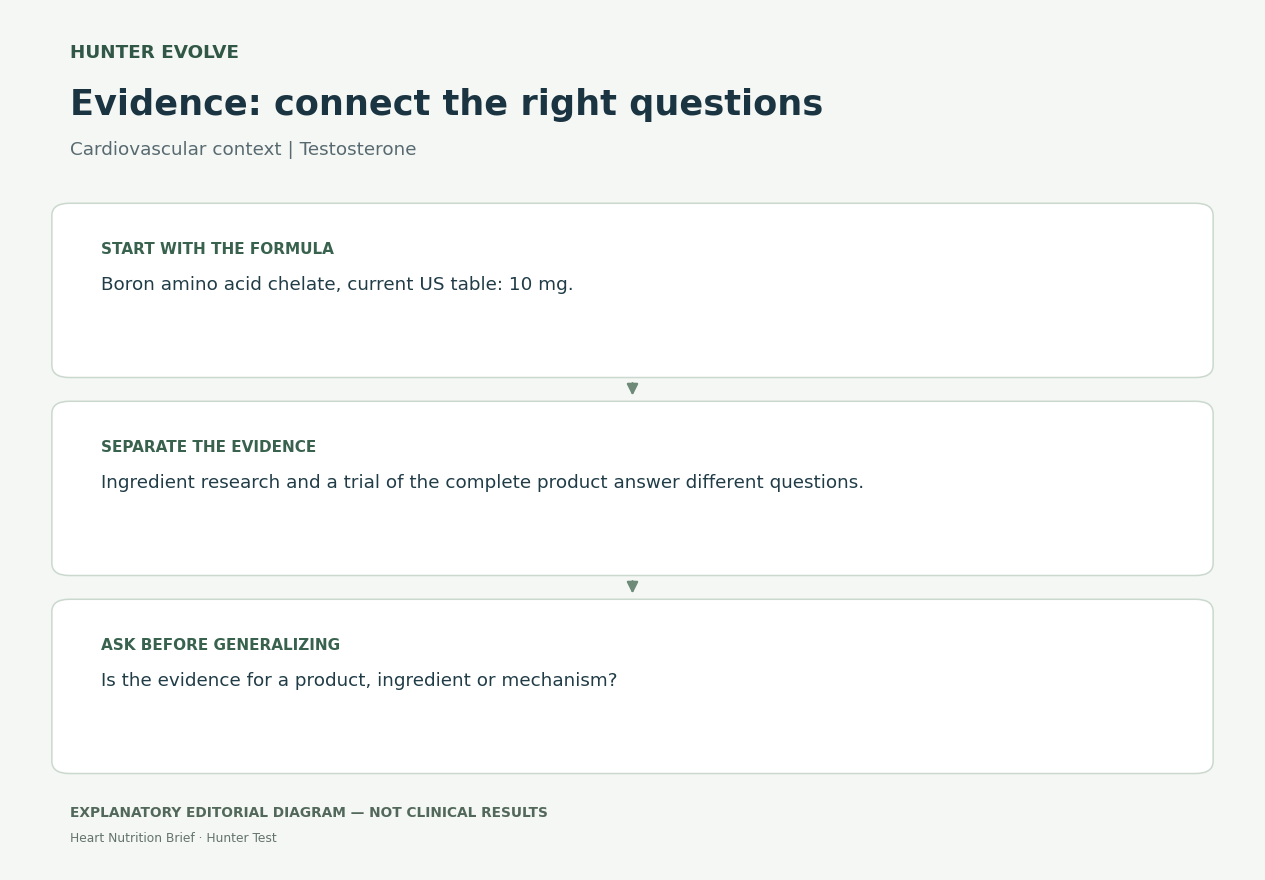
Vitamin K2 adds a separate consideration for people using warfarin, whose treatment depends on consistent vitamin K intake and clinical management. Boron at 10 mg is another amount to count across products rather than casually double through stacking. These details help readers make a better comparison because they describe real differences in suitability. They do not support a blanket ranking in which the product containing the highest percentage of a nutrient automatically wins.
The current US and other regional tables should be treated as distinct product-information records. Even when headline amounts look similar, changing a mineral form or botanical standardization changes what can be inferred about the preparation. The package supplied in the buyer’s region is the practical reference point. Confirming that version is particularly valuable before comparing it with a study that used a named extract. A product photo can establish the brand and bottle identity, but a readable Supplement Facts panel is needed to settle the detailed formula.
The botanical story needs extract-specific context
Hunter Test pairs ashwagandha and ginseng, two plants frequently discussed in relation to stress, vitality and sexual wellness. The current US table identifies 300 mg of each and provides standardization details. Those are useful starting points, but the exact preparation matters. Human research on one root extract does not automatically establish the effects of another preparation at a different amount or used within a nine-active formula.
Ashwagandha has some supportive evidence for selected outcomes, while NCCIH also identifies meaningful safety considerations, including effects on the thyroid and potential problems for certain liver, immune or hormone-sensitive conditions. Ginseng can interact with medicines and may affect sleep or blood sugar. Indole-3-carbinol gives the formula a hormone-metabolism angle, but a mechanism involving estrogen metabolism is not proof that reducing estrogen is desirable or that this product will improve libido. Men need normal estrogen physiology too; hormone balance is not a synonym for suppressing one hormone without assessment.
Capsule burden and daily use influence value
Six capsules per day is a material feature, not a minor footnote. Some readers prefer a single product containing several ingredients, while others find repeated capsules inconvenient. A large bottle may look generous until the serving size is considered. Thirty full servings is the useful comparison point, and the current other-ingredient line includes gelatin, so this is not a vegan product simply because several active ingredients are plants.
The practical review should also avoid converting manufacturer suggestions into an individualized regimen. It can report the six-capsule serving and the thirty-serving supply, but a reader’s need for high-dose nutrients or multiple hormone-oriented ingredients cannot be decided from a website. A fair value assessment considers dose transparency, serving burden, verified testing information, exact purchase terms and the evidence attached to outcomes. It does not assume that filling more capsules necessarily makes a product more effective than a simpler testosterone-support supplement.
Muscle, sexual wellness and hormone concentration are related topics without being interchangeable outcomes. An ingredient can be involved in testosterone biology yet fail to improve strength in a controlled training study. A man can also gain strength through a better program without a meaningful hormone change. Hunter’s substantial D-aspartic acid amount is therefore best understood through the mixed trial record rather than a simple biochemical story. The purchase decision becomes clearer when the desired outcome is defined and the evidence is checked for that outcome specifically.
A fair takeaway and a relevant alternative
Hunter Test offers a fully disclosed nine-active concept, a clear daily serving and a direct testosterone-support focus. The main reservations are equally concrete: six daily capsules, a vitamin D amount above the general adult upper limit, substantial zinc and boron exposure, regional-label variation and mixed D-aspartic acid findings. No randomized efficacy trial of the exact complete finished formula was verified here. The resulting assessment can be firm without becoming hostile or suggesting that the product is ineffective for every possible user.
Compare the active question, not just the biggest number
In a beetroot comparison, total beet material is not the same measurement as nitrate content. Elsewhere, the weight of a plant extract does not necessarily reveal the amount of a particular active constituent. The common lesson is to identify what a number represents before using it to compare products. A high herb-equivalent figure can be perfectly legitimate labeling while still answering a different question from the amount of extract physically present in a serving.
A careful cardiovascular buying decision also accounts for the person using the product. Keep a list of medicines and supplements, and discuss relevant precautions before adding a formula when you have heart or blood-pressure concerns. The owned alternative recommended in this review should face the same test as the competitor: verified label details, relevant evidence, realistic expectations and a role alongside appropriate care. A commercial recommendation does not establish equal formulations or superior clinical results.
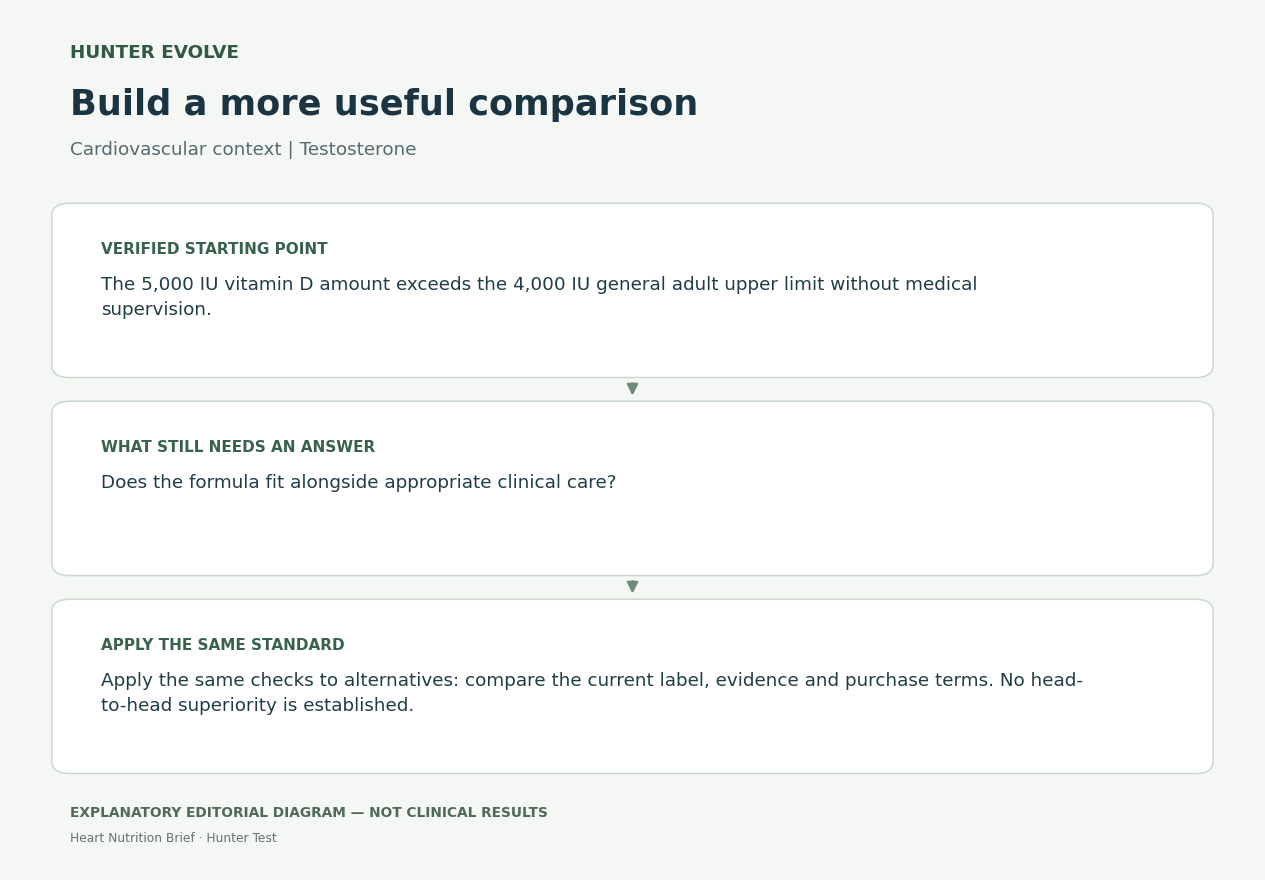
How to compare Hunter Evolve Hunter Test with Max T
Start with the actual goal rather than a presumed winner. Hunter Evolve Hunter Test and Max T deserve a comparison of their present product or service details, the kind of evidence available and the practical routine involved. Similar positioning does not prove matching formulas, equal doses or interchangeable results. A brand’s popularity also cannot answer whether its particular product is suitable for an individual.
Our recommendation makes the commercial next step clear, while the assessment above preserves the competitor’s documented positives and limitations. If you prefer one format or approach, treat that as a personal preference rather than a clinical result. Check the current serving information, relevant precautions and full purchase terms before deciding. Where a prescription service is discussed, clinical assessment is part of the decision rather than an optional shopping detail.
The verdict: choose for fit, evidence and a realistic routine
The strongest reason to consider Hunter Evolve Hunter Test is the combination of documented features described in this review and a goal that actually matches its category. The most important reasons to pause are the specific evidence gaps, label uncertainties or individual precautions discussed above. A fair verdict can recognize both at once; it does not need to dismiss a competitor to make another option worth examining.
For a category-matched next step, the recommendation below highlights Max T from our range. Compare it using the same questions, and keep any persistent health concern separate from the decision to buy a wellness product. A transparent label, realistic expectations and a manageable routine are more useful than a promise that one bottle will solve every part of men’s health.
Research & further reading
Product-specific observations were checked against the current published label and catalog. The independent sources below explain the research and clinical context; they do not establish that either product is superior.
- Systematic review of proposed testosterone boosters
- Three and six grams of D-aspartic acid in resistance-trained men
- D-aspartic acid and three months of resistance training: randomized trial
- NCCIH: Ashwagandha usefulness and safety
- NIH ODS: Vitamin D health professional fact sheet
- NIH ODS: Zinc health professional fact sheet
- NIH ODS: Boron health professional fact sheet
Continue reading
Our Max T review · More on testosterone · All product reviews