Testosil Review: Heart-Health Considerations
Label-based review of Testosil: D-aspartic acid and L-arginine HCl, cardiovascular precautions and what the supporting research can—and cannot—show.
Testosil’s strongest promotional number describes a relative difference in testosterone change in an ashwagandha study. It should not be read as a 434 percent increase from a customer’s own baseline, and it does not describe a randomized trial of the complete finished Testosil formula. That distinction changes the meaning of the claim.
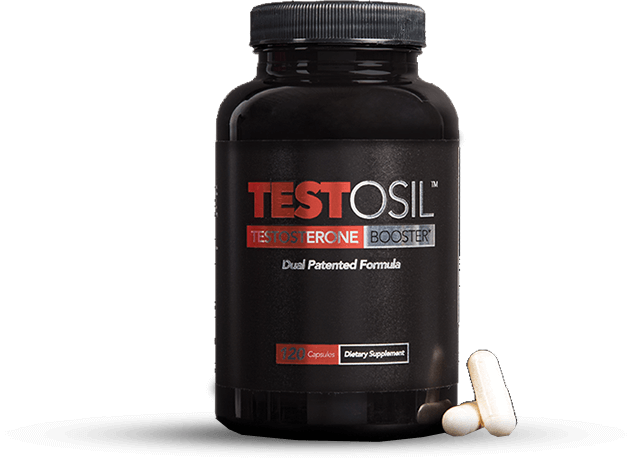
Published-label and research assessment. We checked current catalog information, available Supplement Facts images and linked scientific sources. No personal use, independent laboratory testing or head-to-head trial is claimed. Two promotional recommendations concern products or services sold by the owner of this publication.
Is Testosil the right fit for your goal?
Testosil is worth evaluating for its actual formula and current label, rather than its reputation alone. This review looks at circulation and safety context: what is documented, where the evidence is limited, and which practical questions matter before a purchase. The aim is a useful decision, not a score assembled from promotional claims.
We also identify Myogentra as a category-matched option from our own range in two clearly marked recommendation sections. That commercial relationship does not change the evidence standard applied to Testosil. Genuine strengths are acknowledged, unresolved details stay unresolved, and no hands-on testing or clinical superiority is invented.
The striking headline needs an unusually clear explanation
Testosil’s strongest promotional number describes a relative difference in testosterone change in an ashwagandha study. It should not be read as a 434 percent increase from a customer’s own baseline, and it does not describe a randomized trial of the complete finished Testosil formula. That distinction changes the meaning of the claim.
The cited study compared an ingredient regimen alongside resistance training with placebo alongside the same broad training context. A greater change in one group can produce a dramatic relative headline without meaning that participants multiplied their starting hormone level by that percentage. The actual study structure does not support a promise of a huge personal testosterone increase.
The displayed four-capsule label is the factual starting point
The official facts image lists a four-capsule serving and thirty servings per container. It includes DAA, KSM-66, several botanicals, L-arginine, an absorption blend and micronutrients. The individual amounts make it possible to assess the actual formulation instead of relying on the bottle’s front-panel language.
There is an important conflict to preserve. The four-capsule panel lists 300 mg KSM-66, while other marketing describes 600 mg at a maximum serving. Without reconciled current dosing information, the larger amount cannot be assumed to be the standard daily dose. This is a limitation of the information available, not evidence that the manufactured product is misfilled. A readable current label and matching directions would be needed to settle it.
The ashwagandha trial does not test every component in the bottle
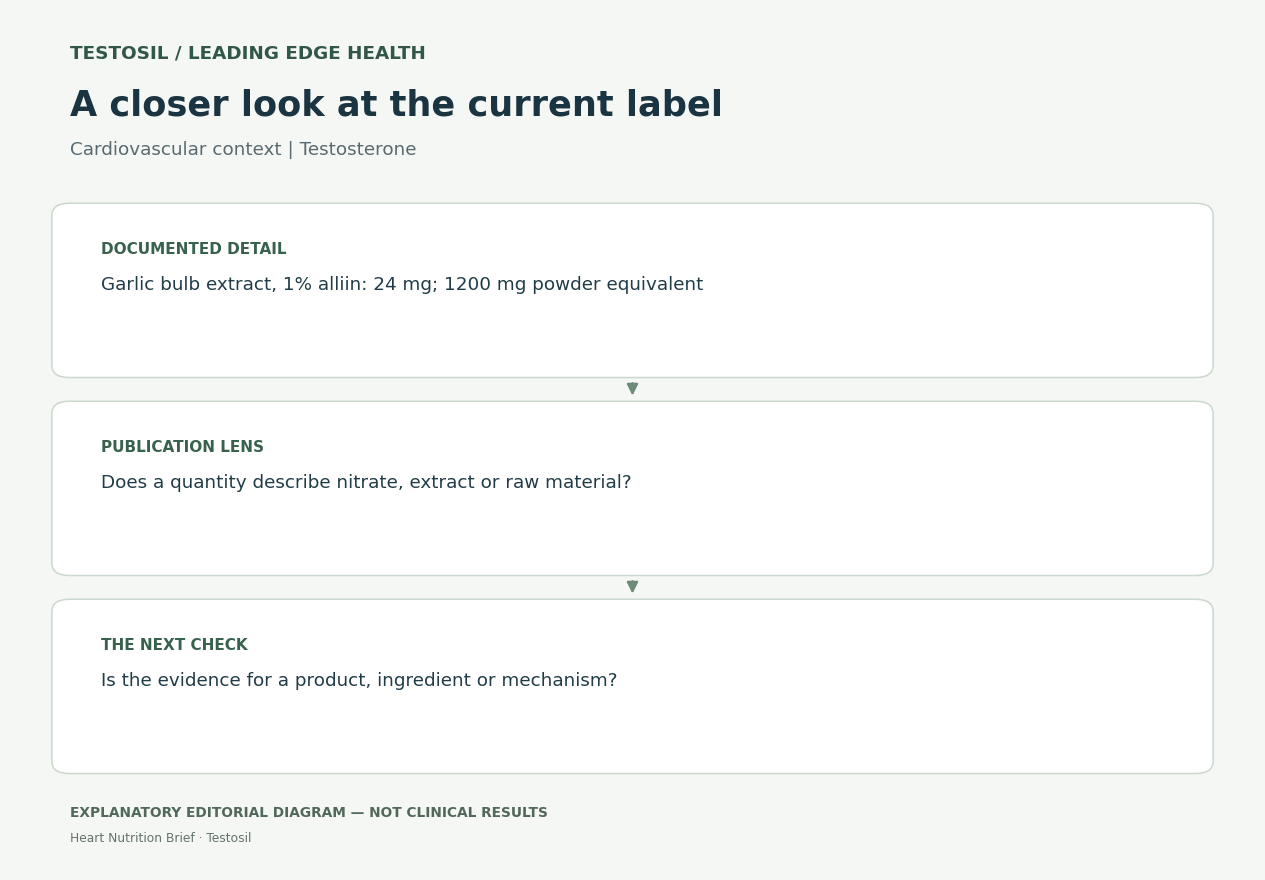
A named extract provides a relevant research trail. That is an advantage over an unspecified botanical claim, but the evidence still depends on the actual dose, population and outcome. The well-known trial does not prove that adding the other Testosil ingredients reproduces its findings or improves them. A formulation is not automatically clinically validated because one of its components has been studied.
This research did not identify a randomized clinical trial of the complete current Testosil combination. The correct conclusion is uncertainty about the finished product’s outcomes, not a universal declaration that it works or fails. The rationale for considering the formula remains separate from the headline’s numerical interpretation and the missing direct evidence.
Powder equivalents and absorption claims need boundaries
Some label entries include a stated starting-plant equivalent as well as the actual extract amount. Those figures should not be treated as interchangeable when comparing clinical studies. A concentrated ingredient can differ in composition from another preparation with the same nominal powder equivalent. The underlying chemistry and standardization matter more than picking the largest displayed milligram number.
The absorption blend creates a similar reasoning issue. Better uptake of a particular compound, if demonstrated in a specific setting, is not the same as showing superior testosterone outcomes from the complete combination. What was measured, and in which intervention, determines how relevant that result is. It should avoid using absorption terminology as an all-purpose explanation for why different or smaller ingredient quantities must produce a larger benefit.
The mineral totals are a practical constraint
The displayed daily serving lists 100 mcg vitamin D3 and forty milligrams zinc. Each matches the corresponding US adult upper limit before other intake is considered, absent clinician-directed treatment. Those are important figures for a reader already using a multivitamin or separate nutrient supplements. More is not automatically better once normal nutritional needs are met.
The highest percentage Daily Value is not proof of the best formula. Instead, it should ask why the nutrient is being supplemented, whether deficiency has been identified and how the whole routine adds up. That approach can help a customer compare broad testosterone products without accidentally treating duplication as a benefit. It also gives a qualified professional a clearer basis for reviewing suitability.
For heart health, distinguish support from treatment
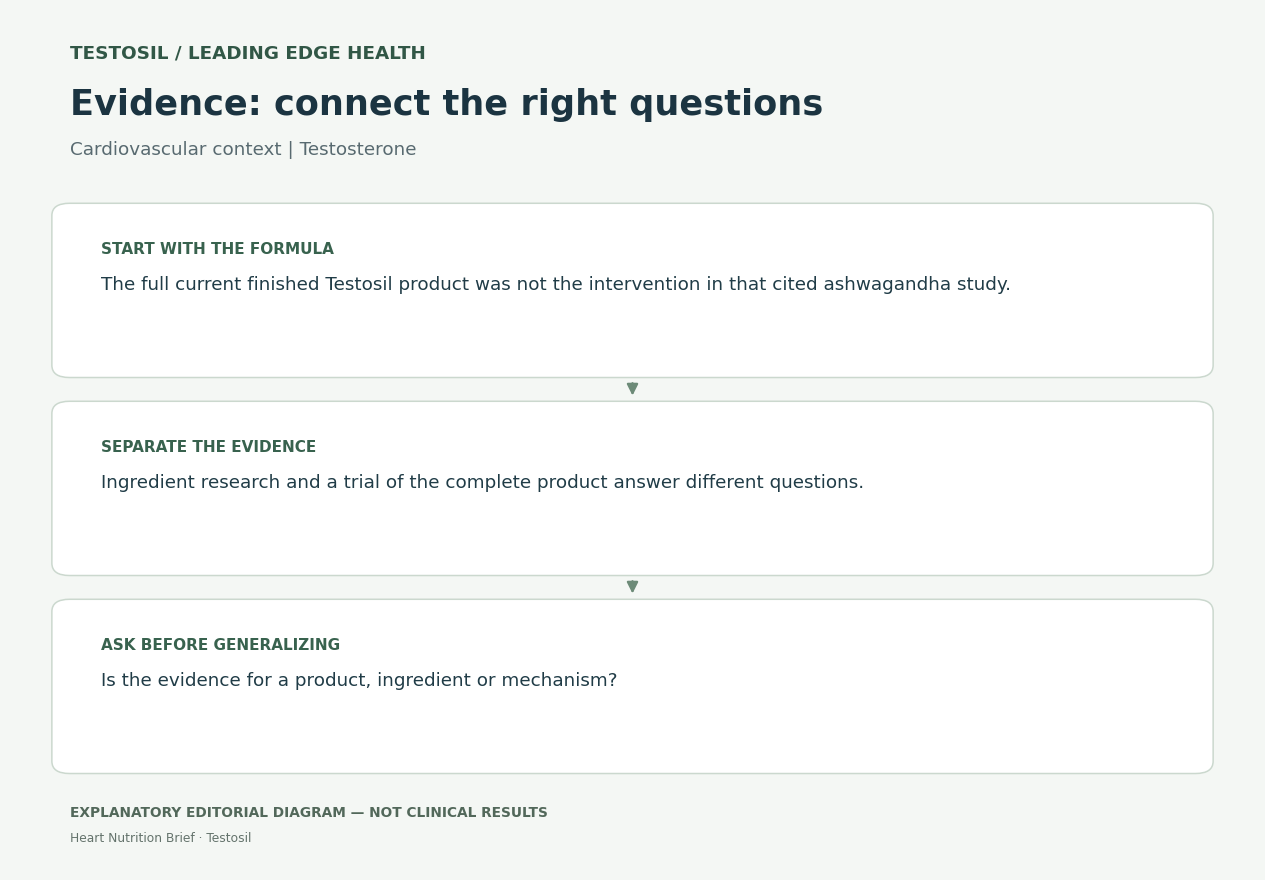
A cardiovascular-sounding claim can cover very different things: an ingredient mechanism, a small study of a measured marker, an exercise finding or a trial of a complete commercial product. Those are not interchangeable. Evaluate Testosil according to the evidence that actually belongs to it, and keep the result separate from claims about preventing heart attacks, treating hypertension or replacing prescribed medication. A general support label does not establish those medical benefits.
This distinction is equally useful when the reviewed product is a testosterone, sexual-wellness or hair formula rather than a heart-health supplement. Marketing categories do not remove cardiovascular considerations. The complete ingredient list, relevant cautions and existing medicines still matter. If a product is associated with stimulant effects, changes in blood pressure or important interactions, an honest review should preserve that information rather than hide it beneath a positive description of vitality.
What a testosterone-support comparison should establish
A useful testosterone-support review distinguishes normal nutritional support from treatment of a hormonal disorder. A formula may combine minerals, vitamins and botanicals with different kinds of evidence. Some research concerns people with low baseline levels or a particular deficiency; other studies examine selected extracts in small groups. Neither situation justifies promising the same result to everyone. Ingredient research is relevant context, but the complete product, preparation, dose and study population still matter.
More ingredients also mean more comparison work. Check what is individually disclosed, what sits inside a blend and what overlaps with other products. Extract ratios and herb-equivalent numbers need careful reading. A plant name shared between two formulas does not establish matching exposure, and a larger headline quantity does not settle efficacy. If two sources disagree about the current formula, the disagreement should remain visible until the manufacturer resolves it.
For a reader deciding whether to buy, the reasonable conclusion is specific rather than universal. Evaluate the product’s documented strengths, unresolved questions and fit with a realistic routine. If symptoms suggest a possible hormonal issue, discuss appropriate evaluation instead of treating a supplement as a substitute for diagnosis. Our category-matched recommendation offers another label and purchase option to assess; it does not establish that an owned formula raises testosterone more effectively or treats clinically low testosterone.
Natural ingredients still have condition and medication considerations
Ashwagandha carries thyroid, liver and medication considerations described by NCCIH. L-arginine and the wider botanical mixture add other questions for people managing blood pressure or using medications. Natural labeling does not remove the need to check an individual situation.
The current displayed capsule list also includes gelatin, a practical fact for a vegan buyer. Manufacturing registration and inspection language should be distinguished from FDA approval of a supplement’s efficacy. Regulatory-sounding language alone does not establish safety or quality, and the full product has not been independently tested here. Accurate limits can be stated plainly without overwhelming the reader.
Comparing Testosil with Myogentra
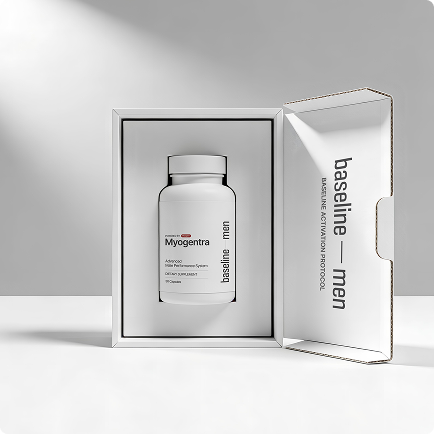
Myogentra is another testosterone-support option to compare with Testosil. Start with the complete current daily serving, the actual ingredient forms, the capsule or tablet routine and any overlap with what you already take. A familiar herb name on both labels does not make the preparations identical. Practical differences can matter even when a clinically superior choice has not been established.
Our commercial recommendation is to explore Myogentra as a category-relevant alternative and inspect its current product information before buying. No head-to-head trial establishing greater testosterone improvement than Testosil was identified in this research. The same standard applies to both options: ingredient research is context, a readable label helps comparison, and neither by itself proves that a supplement will address your symptoms. The recommendation is a promotional next step, separate from the assessment of Testosil.
The fair verdict on Testosil
Testosil provides a detailed individual-dose label and a recognizable extract story, but it also requires careful interpretation of its strongest numerical claim. The four-capsule ashwagandha quantity and maximum-serving marketing need reconciliation, while substantial vitamin D and zinc make stacking a material practical issue. Those findings are more decision-useful than either repeating the headline or dismissing the product solely because the marketing is forceful.
The product may be worth comparing for a reader who understands the limits and verifies the exact current bottle. It should not be presented as a predictable way to multiply testosterone or as treatment for an unconfirmed low-testosterone diagnosis. A relevant promoted alternative remains subject to the same distinction between ingredient and finished-product evidence, and persistent symptoms still call for individual evaluation.
The percentage is a comparison of changes, not a baseline multiplier
The Testosil headline becomes easier to understand when the change in each study group is distinguished from the starting testosterone value. A large ratio between two changes can produce an eye-catching percentage even when neither group’s baseline level multiplies dramatically. That arithmetic is not unique to supplements, but it is particularly important when a headline is likely to be read as a personal forecast.
The cited intervention was also an ashwagandha preparation used alongside training. It was not the whole Testosil bottle. Those two distinctions together prevent a dramatic but unsupported conclusion. A consumer can still regard the ingredient study as interesting while declining to treat the headline as a promised result. The unresolved four-capsule versus maximum-serving amount is another reason to verify the actual current directions instead of assuming the strongest marketing number identifies the standard daily intake.
A complete comparison includes the routine beyond the bottle
A prospective Testosil user may already take vitamin D, zinc, a multivitamin or a pre-workout. The combination matters because the displayed panel already provides substantial mineral and vitamin amounts and several botanicals. Looking only at whether one ingredient sounds beneficial can miss the more practical question of what the total routine would contain after the new product is added.
The decision is also easier when the goal is defined clearly. A desire for more training energy is not the same as a verified hormone concern, and a difficult week does not diagnose low testosterone. Appropriate testing and interpretation are more informative than inferring a condition from a sales narrative. Myogentra can be explored as a promotional alternative in the same category, but it should be evaluated against that same objective and whole-routine context. A different product page can offer different details to compare; it cannot establish the cause of symptoms on its own.
Compare the active question, not just the biggest number
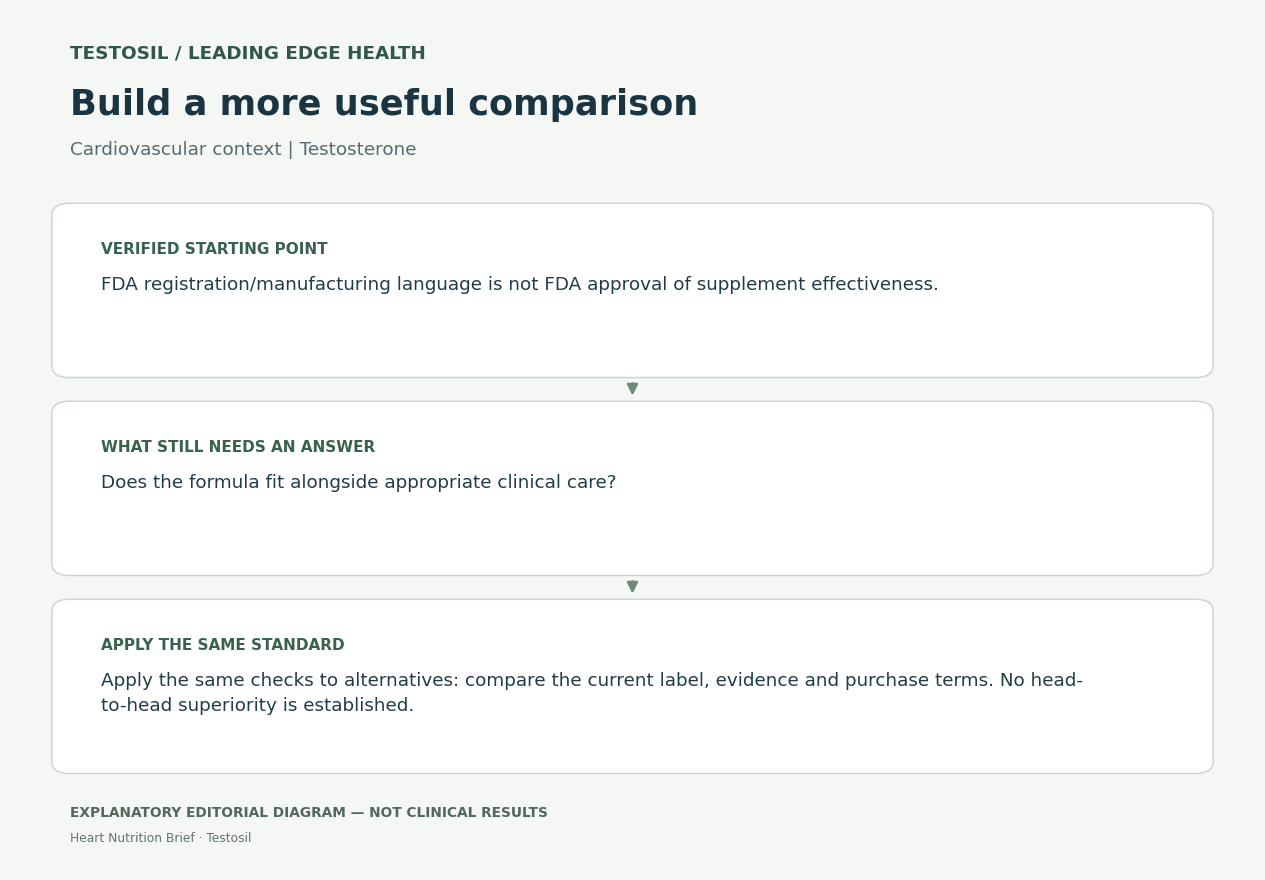
In a beetroot comparison, total beet material is not the same measurement as nitrate content. Elsewhere, the weight of a plant extract does not necessarily reveal the amount of a particular active constituent. The common lesson is to identify what a number represents before using it to compare products. A high herb-equivalent figure can be perfectly legitimate labeling while still answering a different question from the amount of extract physically present in a serving.
A careful cardiovascular buying decision also accounts for the person using the product. Keep a list of medicines and supplements, and discuss relevant precautions before adding a formula when you have heart or blood-pressure concerns. The owned alternative recommended in this review should face the same test as the competitor: verified label details, relevant evidence, realistic expectations and a role alongside appropriate care. A commercial recommendation does not establish equal formulations or superior clinical results.
How to compare Testosil with Myogentra
Start with the actual goal rather than a presumed winner. Testosil and Myogentra deserve a comparison of their present product or service details, the kind of evidence available and the practical routine involved. Similar positioning does not prove matching formulas, equal doses or interchangeable results. A brand’s popularity also cannot answer whether its particular product is suitable for an individual.
Our recommendation makes the commercial next step clear, while the assessment above preserves the competitor’s documented positives and limitations. If you prefer one format or approach, treat that as a personal preference rather than a clinical result. Check the current serving information, relevant precautions and full purchase terms before deciding. Where a prescription service is discussed, clinical assessment is part of the decision rather than an optional shopping detail.
The verdict: choose for fit, evidence and a realistic routine
The strongest reason to consider Testosil is the combination of documented features described in this review and a goal that actually matches its category. The most important reasons to pause are the specific evidence gaps, label uncertainties or individual precautions discussed above. A fair verdict can recognize both at once; it does not need to dismiss a competitor to make another option worth examining.
For a category-matched next step, the recommendation below highlights Myogentra from our range. Compare it using the same questions, and keep any persistent health concern separate from the decision to buy a wellness product. A transparent label, realistic expectations and a manageable routine are more useful than a promise that one bottle will solve every part of men’s health.
Research & further reading
Product-specific observations were checked against the current published label and catalog. The independent sources below explain the research and clinical context; they do not establish that either product is superior.
- Examining the effect of Withania somnifera supplementation on muscle strength and recovery: a randomized controlled trial
- Ashwagandha: Usefulness and Safety — NCCIH
- D-aspartic acid with resistance training: randomized controlled trial
- Vitamin D Fact Sheet for Consumers — NIH Office of Dietary Supplements
- Zinc Fact Sheet for Consumers — NIH Office of Dietary Supplements
- Do testosterone boosters really increase serum total testosterone? A systematic review
- Hypogonadism in Men — Endocrine Society
Continue reading
Our Myogentra review · More on testosterone · All product reviews