TestRX Review: Heart-Health Considerations
Label-based review of TestRX: D-aspartic acid, cardiovascular precautions and what the supporting research can—and cannot—show.
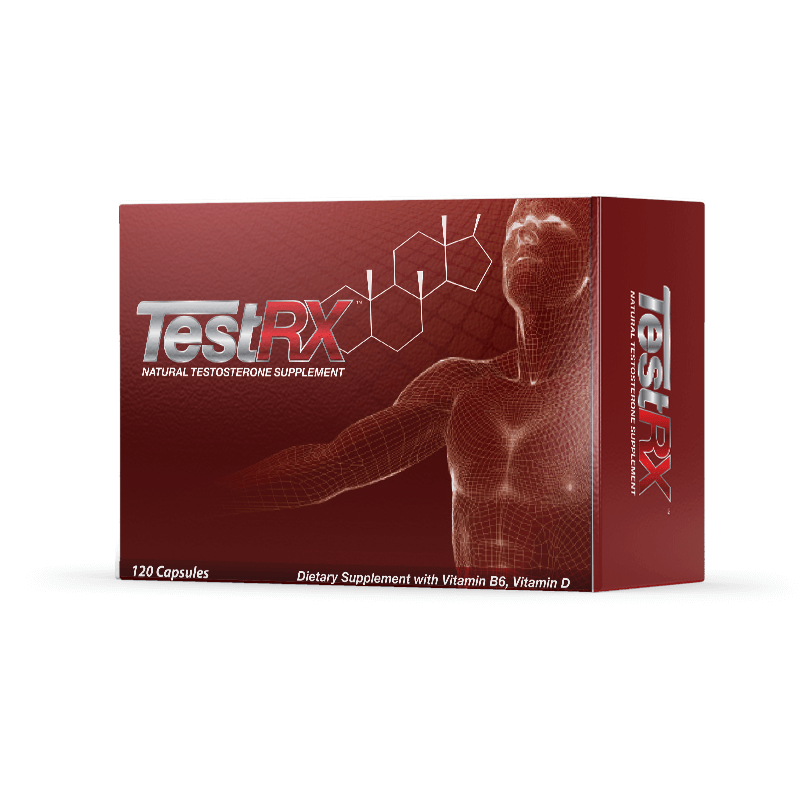
TestRX combines vitamins, minerals, D-aspartic acid, and fenugreek in a capsule formula marketed to men interested in testosterone support and physical performance. Its main practical strength is that the principal active amounts are visible in the official label image. That makes the formulation easier to examine than a hidden blend. Its central scientific limitation is that a recognizable ingredient concept is not the same as evidence that the current complete product reliably improves.
Published-label and research assessment. We checked current catalog information, available Supplement Facts images and linked scientific sources. No personal use, independent laboratory testing or head-to-head trial is claimed. Two promotional recommendations concern products or services sold by the owner of this publication.
Is TestRX the right fit for your goal?
TestRX is worth evaluating for its actual formula and current label, rather than its reputation alone. This review looks at circulation and safety context: what is documented, where the evidence is limited, and which practical questions matter before a purchase. The aim is a useful decision, not a score assembled from promotional claims.
We also identify Myogentra as a category-matched option from our own range in two clearly marked recommendation sections. That commercial relationship does not change the evidence standard applied to TestRX. Genuine strengths are acknowledged, unresolved details stay unresolved, and no hands-on testing or clinical superiority is invented.
A traditional testosterone-support concept with a familiar ingredient core
TestRX combines vitamins, minerals, D-aspartic acid, and fenugreek in a capsule formula marketed to men interested in testosterone support and physical performance. Its main practical strength is that the principal active amounts are visible in the official label image. That makes the formulation easier to examine than a hidden blend. Its central scientific limitation is that a recognizable ingredient concept is not the same as evidence that the current complete product reliably improves testosterone, muscle growth, sexual function, or recovery in the people considering it.
The product is currently listed by Leading Edge Health and should be reviewed as a dietary supplement, not as prescription testosterone or an erectile-dysfunction medicine. The absence of needles or a prescription describes the type of purchase; it does not establish equivalent clinical effects. An evidence-based assessment resists borrowing the authority of testosterone treatment while avoiding an automatic dismissal of the formula. The useful question is whether the stated ingredients and available human evidence justify the specific expectations that bring a reader to this product.
Read the official label and record version differences
The official product packaging shows 120 capsules, with four capsules per serving and 30 servings per container. The posted panel lists vitamin D3 at 1,140 IU, vitamin K2 at 20 micrograms, vitamin B6 at 5 milligrams, magnesium at 200 milligrams, zinc at 10 milligrams, D-aspartic acid at 2,300 milligrams, and fenugreek at 300 milligrams. The fenugreek is described in relation to saponin standardization. Those amounts provide a concrete basis for discussing the product rather than repeating broad promises about male vitality.
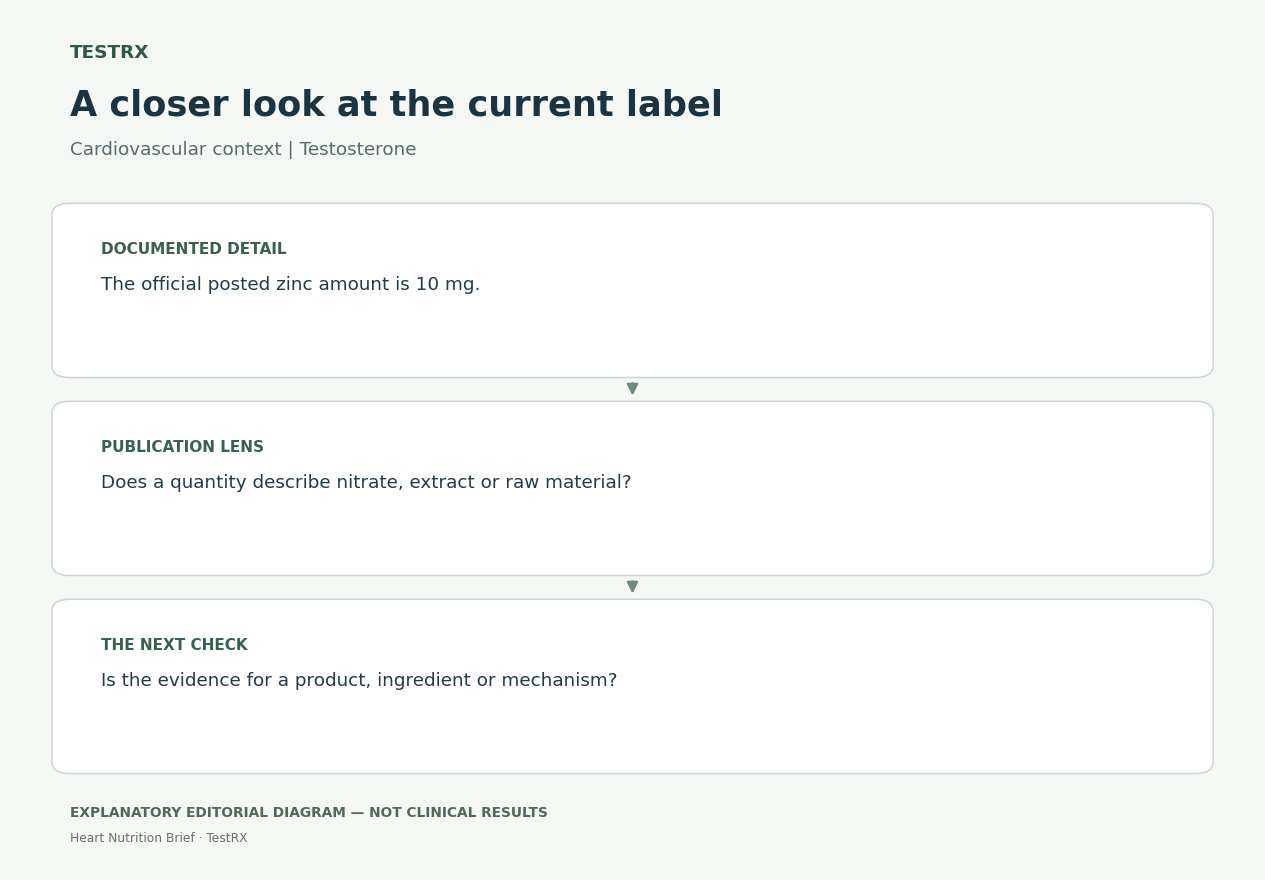
There is a practical version issue: some secondary listings report a different zinc quantity. The official image reviewed here shows 10 milligrams, so substituting another value or blending incompatible versions would create confusion. The reviewed official panel identifies the version assessed here; the current physical label controls an individual purchase. Label consistency matters because a seemingly minor discrepancy can change nutrient comparisons and can also signal that a review copied an older formula without checking it.
D-aspartic acid has a mixed research history
D-aspartic acid is the ingredient most likely to attract readers seeking a direct testosterone story. Early research generated interest, but later controlled trials in resistance-trained men did not consistently reproduce a beneficial hormonal effect. A three-month training study and shorter investigations provide important counterweights to a single attractive percentage. The existence of mixed findings means the ingredient cannot be described as definitively proven to raise testosterone across all adult men, and a favorable study does not predict an individual response.
Dose matching also matters. TestRX's 2,300-milligram amount should not be treated as interchangeable with every study using a different daily dose. Nor is it valid to assume that adding vitamins and fenugreek necessarily resolves inconsistent D-aspartic-acid results. That would require direct evidence about the combination. The fair conclusion is that D-aspartic acid gives the formula a plausible research question, while the available literature does not support a confident, universal hormone promise. An isolated trial headline does not resolve those uncertainties.
The mineral foundation is nutritional, not automatically anabolic
The vitamin-and-mineral component has a reasonable nutritional rationale, but correcting an inadequate intake is different from continuously amplifying hormones in someone with adequate status. Zinc, magnesium, and vitamin B6 have normal physiological roles. Their presence does not establish that every user is deficient, that a deficiency explains the user's symptoms, or that the combination will generate new muscle independently of training, diet, and the underlying medical situation. Nutritional adequacy matters, but is not the same as a demonstrated treatment effect.
The same caution applies to vitamin D3. A clearly stated amount helps readers count total intake, but a vitamin D supplement is not a universal testosterone intervention. The full daily routine matters because readers may already take a multivitamin, bone-health product, or separate magnesium or zinc. TestRX's label disclosure is useful precisely because it permits that comparison. It would be misleading to mistake transparency for guaranteed efficacy, but should credit the practical benefit of being able to inspect the amounts and discuss them with a qualified professional when necessary.
For heart health, distinguish support from treatment
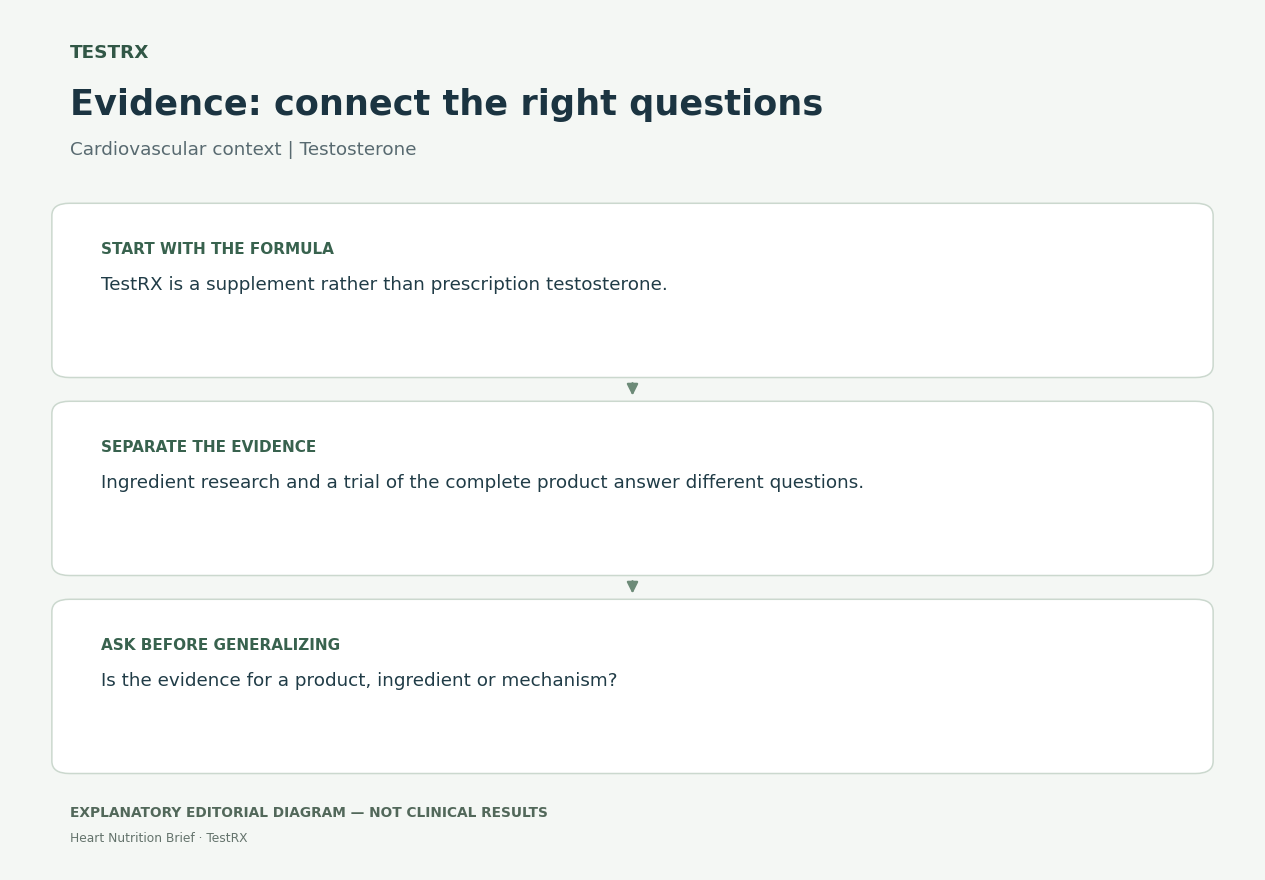
A cardiovascular-sounding claim can cover very different things: an ingredient mechanism, a small study of a measured marker, an exercise finding or a trial of a complete commercial product. Those are not interchangeable. Evaluate TestRX according to the evidence that actually belongs to it, and keep the result separate from claims about preventing heart attacks, treating hypertension or replacing prescribed medication. A general support label does not establish those medical benefits.
This distinction is equally useful when the reviewed product is a testosterone, sexual-wellness or hair formula rather than a heart-health supplement. Marketing categories do not remove cardiovascular considerations. The complete ingredient list, relevant cautions and existing medicines still matter. If a product is associated with stimulant effects, changes in blood pressure or important interactions, an honest review should preserve that information rather than hide it beneath a positive description of vitality.
What a testosterone-support comparison should establish
A useful testosterone-support review distinguishes normal nutritional support from treatment of a hormonal disorder. A formula may combine minerals, vitamins and botanicals with different kinds of evidence. Some research concerns people with low baseline levels or a particular deficiency; other studies examine selected extracts in small groups. Neither situation justifies promising the same result to everyone. Ingredient research is relevant context, but the complete product, preparation, dose and study population still matter.
More ingredients also mean more comparison work. Check what is individually disclosed, what sits inside a blend and what overlaps with other products. Extract ratios and herb-equivalent numbers need careful reading. A plant name shared between two formulas does not establish matching exposure, and a larger headline quantity does not settle efficacy. If two sources disagree about the current formula, the disagreement should remain visible until the manufacturer resolves it.
For a reader deciding whether to buy, the reasonable conclusion is specific rather than universal. Evaluate the product’s documented strengths, unresolved questions and fit with a realistic routine. If symptoms suggest a possible hormonal issue, discuss appropriate evaluation instead of treating a supplement as a substitute for diagnosis. Our category-matched recommendation offers another label and purchase option to assess; it does not establish that an owned formula raises testosterone more effectively or treats clinically low testosterone.
Fenugreek evidence depends on the preparation
Fenugreek has appeared in human studies relevant to male vitality and hormone-related outcomes, but the preparation and dose are important. A generic seed extract or a saponin-standardized product cannot automatically inherit findings from every proprietary fenugreek extract. The reviewed label's 300-milligram amount should therefore be described accurately without suggesting that it duplicates any favorable trial by name. Ingredient studies can inform the rationale, while evidence for the complete TestRX formula remains a separate question that was not answered by an identified controlled trial in this research.
This distinction also prevents an exaggerated synergy story. A formula may be designed to combine nutritional support with botanicals and an amino-acid-related ingredient, but the word synergy requires more evidence than the fact that ingredients are packaged together. An evidence-based assessment can explain the design in accessible language: the formula combines several approaches commonly considered in testosterone-support supplements, with different degrees of supporting evidence. It should not promise that those approaches add up to a predictable change in muscle size, fat loss, libido, or laboratory results for every reader.
Vitamin K creates a specific medication consideration
The vitamin K2 component deserves a concise practical note for people taking warfarin or related anticoagulant therapy. NIH explains that changes in vitamin K intake can affect anticoagulant control. That does not mean everyone taking TestRX faces this interaction, and it does not establish a product-specific adverse event. It means a reader using such a medicine should not add a vitamin-K-containing supplement casually or interpret an all-natural description as evidence that it cannot affect medical treatment. The reason for seeking advice should be stated clearly.
Minerals can also interact with certain medicines, including some antibiotics, so a full-routine review is more useful than evaluating the capsule in isolation. It is important to avoid supplying a speculative medication-separation schedule or assuring the reader that a small amount makes every interaction irrelevant. It can remain concise and readable while preserving the material point. These considerations matter because the product is marketed for continuing use and broad wellness, circumstances in which readers may otherwise overlook that a supplement can alter an established medication regimen.
Promotional alternative: explore Myogentra for another formulation
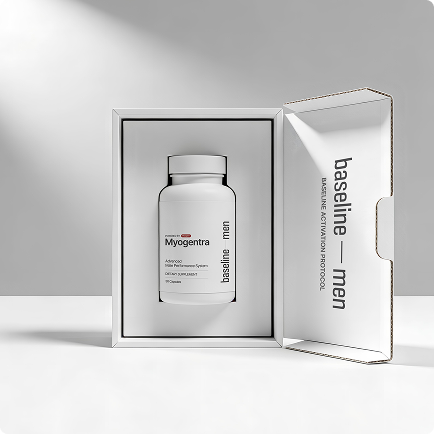
Myogentra is a category-matched option to explore if you are comparing testosterone-support supplements alongside TestRX. Its current label, format, and purchase terms give you another approach to examine. This recommendation is promotional and should be understood as an invitation to compare, rather than as proof that Myogentra produces greater hormone changes or better physical outcomes. No head-to-head evidence establishing those advantages was identified in the research reviewed here.
TestRX's mix of D-aspartic acid, minerals, and fenugreek raises useful questions about study relevance and preparation. Apply the same questions to Myogentra: what is actually supplied, at what daily amount, in which extract form, and with what finished-product evidence? A recommendation is most useful when it improves the information available to you before purchase. It should not replace the uncertainty surrounding one formula with a guarantee about another, or encourage you to assume that every persistent symptom can be resolved by switching supplement brands.
The decision: an understandable formula with mixed D-aspartic-acid evidence
TestRX's practical strength is a comparatively understandable ingredient core with disclosed principal amounts and a clear monthly supply format. Its main limitation is the gap between broad testosterone-support expectations and the mixed D-aspartic-acid findings, extract-specific fenugreek evidence, and lack of an identified complete-product controlled trial. Conflicting zinc quantities in secondary listings also make the current physical label important. VitaminK matters for readers on warfarin, and the rest of the daily nutrient routine deserves attention as well.
For another testosterone-support formulation to compare, explore Myogentra's current ingredients and purchase options. Keep the focus on verified details, a sustainable routine, and realistic expectations rather than a dramatic promise. The absence of needles or a prescription describes a supplement purchase; it does not establish equivalence to clinically indicated hormone treatment. A fair comparison leaves room for both different supplement preferences and appropriate evaluation when fatigue, sexual symptoms, or suspected low testosterone raise questions that a label alone cannot answer.
Compare the active question, not just the biggest number
In a beetroot comparison, total beet material is not the same measurement as nitrate content. Elsewhere, the weight of a plant extract does not necessarily reveal the amount of a particular active constituent. The common lesson is to identify what a number represents before using it to compare products. A high herb-equivalent figure can be perfectly legitimate labeling while still answering a different question from the amount of extract physically present in a serving.
A careful cardiovascular buying decision also accounts for the person using the product. Keep a list of medicines and supplements, and discuss relevant precautions before adding a formula when you have heart or blood-pressure concerns. The owned alternative recommended in this review should face the same test as the competitor: verified label details, relevant evidence, realistic expectations and a role alongside appropriate care. A commercial recommendation does not establish equal formulations or superior clinical results.
How to compare TestRX with Myogentra
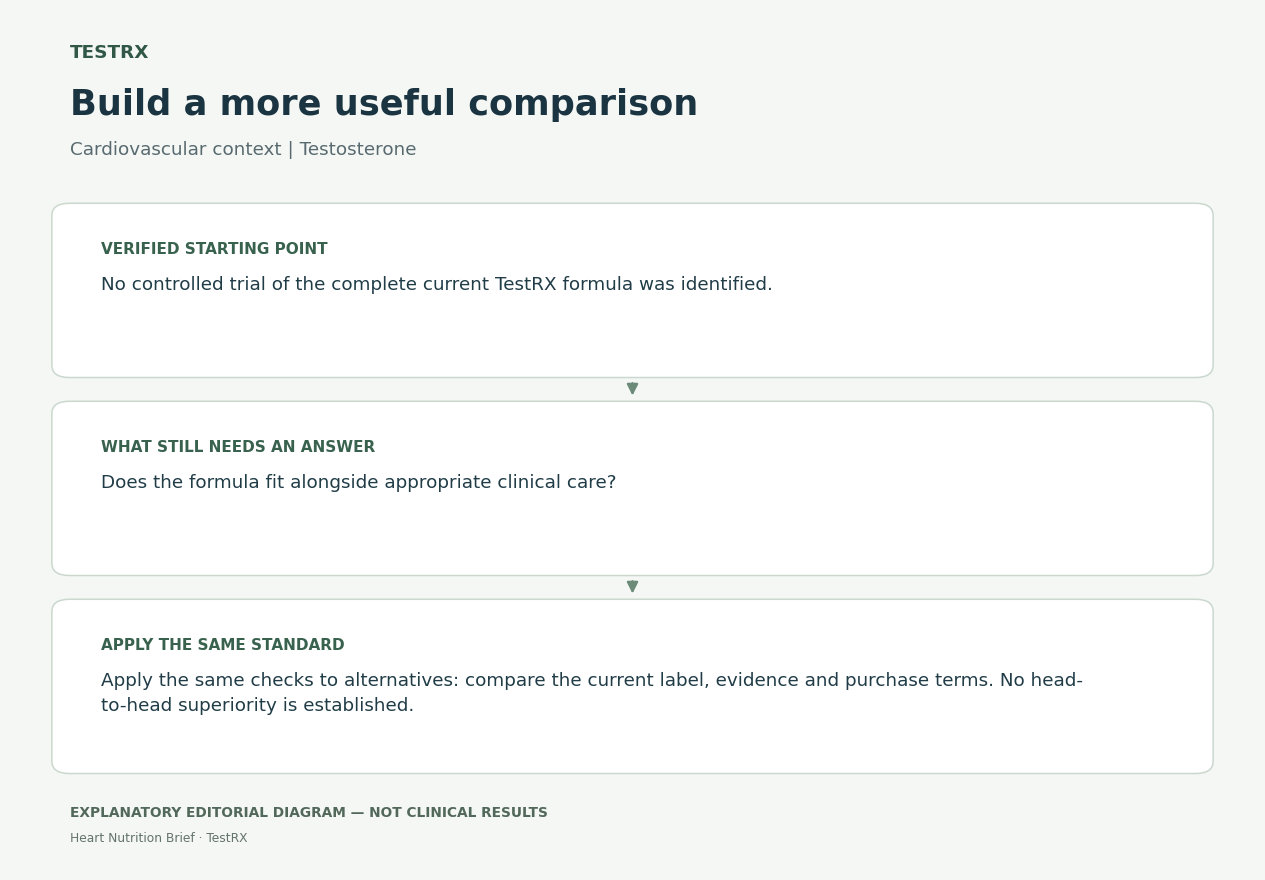
Start with the actual goal rather than a presumed winner. TestRX and Myogentra deserve a comparison of their present product or service details, the kind of evidence available and the practical routine involved. Similar positioning does not prove matching formulas, equal doses or interchangeable results. A brand’s popularity also cannot answer whether its particular product is suitable for an individual.
Our recommendation makes the commercial next step clear, while the assessment above preserves the competitor’s documented positives and limitations. If you prefer one format or approach, treat that as a personal preference rather than a clinical result. Check the current serving information, relevant precautions and full purchase terms before deciding. Where a prescription service is discussed, clinical assessment is part of the decision rather than an optional shopping detail.
The verdict: choose for fit, evidence and a realistic routine
The strongest reason to consider TestRX is the combination of documented features described in this review and a goal that actually matches its category. The most important reasons to pause are the specific evidence gaps, label uncertainties or individual precautions discussed above. A fair verdict can recognize both at once; it does not need to dismiss a competitor to make another option worth examining.
For a category-matched next step, the recommendation below highlights Myogentra from our range. Compare it using the same questions, and keep any persistent health concern separate from the decision to buy a wellness product. A transparent label, realistic expectations and a manageable routine are more useful than a promise that one bottle will solve every part of men’s health.
Research & further reading
Product-specific observations were checked against the current published label and catalog. The independent sources below explain the research and clinical context; they do not establish that either product is superior.
Continue reading
Our Myogentra review · More on testosterone · All product reviews